
Heat Stress in Corn & Soybeans | Signs, Symptoms & Management
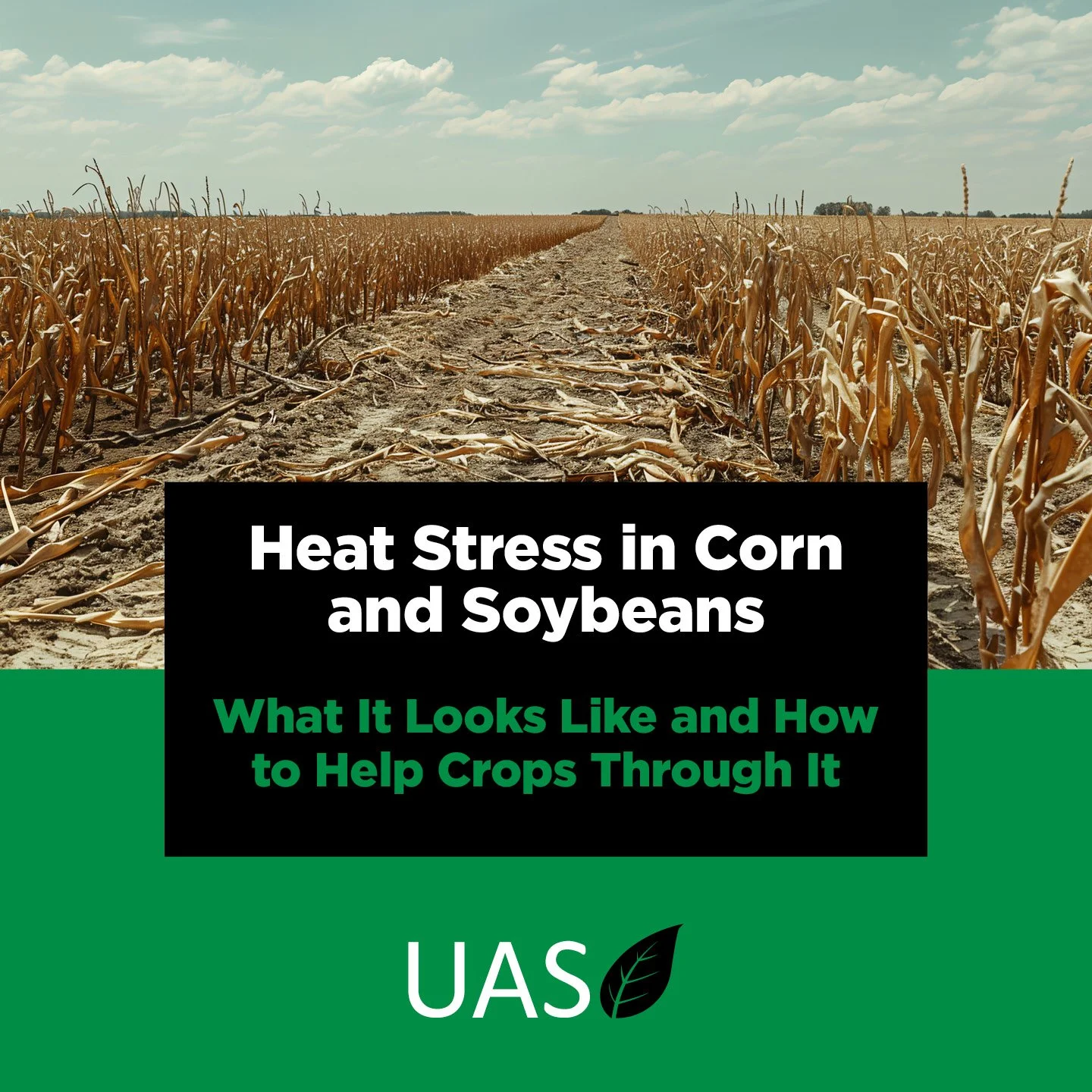
Heat Stress in Corn and Soybeans: What It Looks Like and How to Help Crops Through It
Summer heat is part of farming. But when temperatures climb into the upper 80s and 90s for days on end—especially with limited rainfall—corn and soybeans begin diverting energy away from yield and toward survival.
You can't control the weather, but you can recognize the signs of heat stress early and make management decisions that help your crop withstand difficult conditions. Whether you're walking corn at tassel or soybeans during pod set, here's what to watch for and how to help your crop through the hottest part of the season.
Why Heat Stress Matters
Heat stress isn't just about high temperatures. It's the combination of:
High daytime temperatures
Warm nighttime temperatures
Limited soil moisture
High humidity
Wind
Plant growth stage
When several of these occur together, crops become stressed and begin conserving water instead of maximizing yield. The result?
Reduced photosynthesis
Slower growth
Less nutrient uptake
Poor pollination
Smaller kernels or fewer pods
Lower yields
Corn: Signs of Heat Stress
Corn is especially sensitive around VT (tassel) and R1 (silking). This is one of the most important yield-determining periods of the season.
WHAT TO WATCH FOR:
Leaf Rolling. It’s one of the earliest indicators. Leaves roll inward to reduce water loss. Some rolling during the afternoon is normal. Leaves still rolled the next morning? That's a sign the crop is under prolonged stress.
Short or Delayed Silks. Heat and drought can delay silk emergence. If pollen sheds before silks emerge, kernel counts suffer.
Tip Back. Poor pollination often results in kernels missing from the end of the ear. Many growers call this "tip back."
Firing on Lower Leaves. Lower leaves begin turning brown as the plant reallocates resources upward.
Soybean: Signs of Heat Stress
Soybeans handle heat differently than corn but still experience significant stress.
WHAT TO WATCH FOR:
Wilting. Leaves lose firmness during the day.
Leaves Turning Over. Soybean leaves flip to reduce sunlight exposure. This helps conserve moisture.
Flower Abortion. High temperatures can cause soybeans to abort flowers before pods develop.
Firing on Lower Leaves. Lower leaves begin turning brown as the plant reallocates resources upward.
Pod Abortion. Plants may also shed small pods if stress continues.
Reduced Seed Fill. Even pods that remain may produce smaller seeds if stress persists during grain fill.
Heat Stress vs. Disease
One challenge during July and August is separating environmental stress from disease. Heat stress often appears:
Across entire fields
On hillsides
In lighter soils
During hot afternoons
Disease usually appears:
In patches
Around low areas
Along drainage issues
On individual plants
If you're unsure, dig plants and inspect the roots. Stress above ground often starts below ground.
Scout Fields Early in the Morning
If you're evaluating stress, timing matters. Morning scouting provides a much better picture than afternoon scouting. By midday, nearly every field looks stressed. Morning observations help determine whether plants are recovering overnight—or remaining under prolonged stress.
The Importance of Nutrient Uptake During Stress
Heat stress affects more than appearance. It also affects how efficiently plants take up nutrients.
As stress increases:
Root activity slows.
Water movement decreases.
Nutrient movement becomes less efficient.
Plants prioritize survival over growth.
Helping plants maintain healthy metabolic activity during stressful periods can make a difference later in the season.
Don't Forget About Weather After the Heat
A few hot days aren't always a problem. Extended stress is. Likewise, one good rain doesn't erase weeks of moisture deficits. Continue scouting after temperatures moderate. You'll often notice delayed symptoms appearing several days after stressful weather passes.
Help Crops Beat the Heat with N-Gage Power & N-Gage Thrive
While no product can eliminate heat or drought, helping plants better manage abiotic stress can support healthier crops during difficult growing conditions.

N-Gage Power is designed to support plant health by improving nutrient uptake and helping crops respond to environmental stress. Many growers apply N-Gage Power as a foliar application during key reproductive stages—especially when making a fungicide pass—allowing them to combine trips across the field while supporting overall crop performance.
If you're already planning a foliar application, consider adding N-Gage Power to help your crop push through summer stress.

N-Gage Thrive is designed to help support corn and soybeans during periods of abiotic stress. Whether crops are dealing with excessive moisture, heat, drought, compaction, temperature swings or replant situations, N-Gage Thrive helps support:
Plant health
Root activity
Stress recovery
Continued growth and development
It can be applied as a seed treatment, in-furrow or foliar, allowing growers flexibility throughout the season.
Best Time to Apply
Many growers apply N-Gage Power:
During a fungicide pass
During reproductive stages
Ahead of prolonged heat when possible
As part of a planned foliar nutrition program
Talk with your UAS representative about timing that best fits your operation.
KEY TAKEAWAYS
• Heat stress reduces yield long before harvest.
• Scout fields early in the morning.
• Look for leaf rolling, wilting, flower abortion and tip back.
• Separate disease symptoms from environmental stress.
• Support healthy nutrient uptake during stressful periods.
• Consider adding N-Gage Power during a foliar application.
Frequently Asked Questions
What temperature causes heat stress in corn?
Corn begins experiencing heat stress when daytime temperatures consistently climb into the upper 80s and 90s, especially if accompanied by dry conditions and warm nights.
What are the first signs of heat stress in soybeans?
Wilting, leaves flipping over, flower abortion and pod abortion are common early indicators.
Is leaf rolling in corn always bad?
Not necessarily. Afternoon leaf rolling is common. Leaves that remain rolled the following morning indicate more significant stress.
Should I scout fields during the afternoon?
Morning is best. Afternoon heat causes temporary stress responses that can make healthy fields appear worse than they are.
Can crops recover from heat stress?
Yes—if temperatures moderate and adequate moisture returns. However, severe stress during pollination or reproductive stages can permanently reduce yield.