
How Many Acres Justify Buying a Seed Treater?
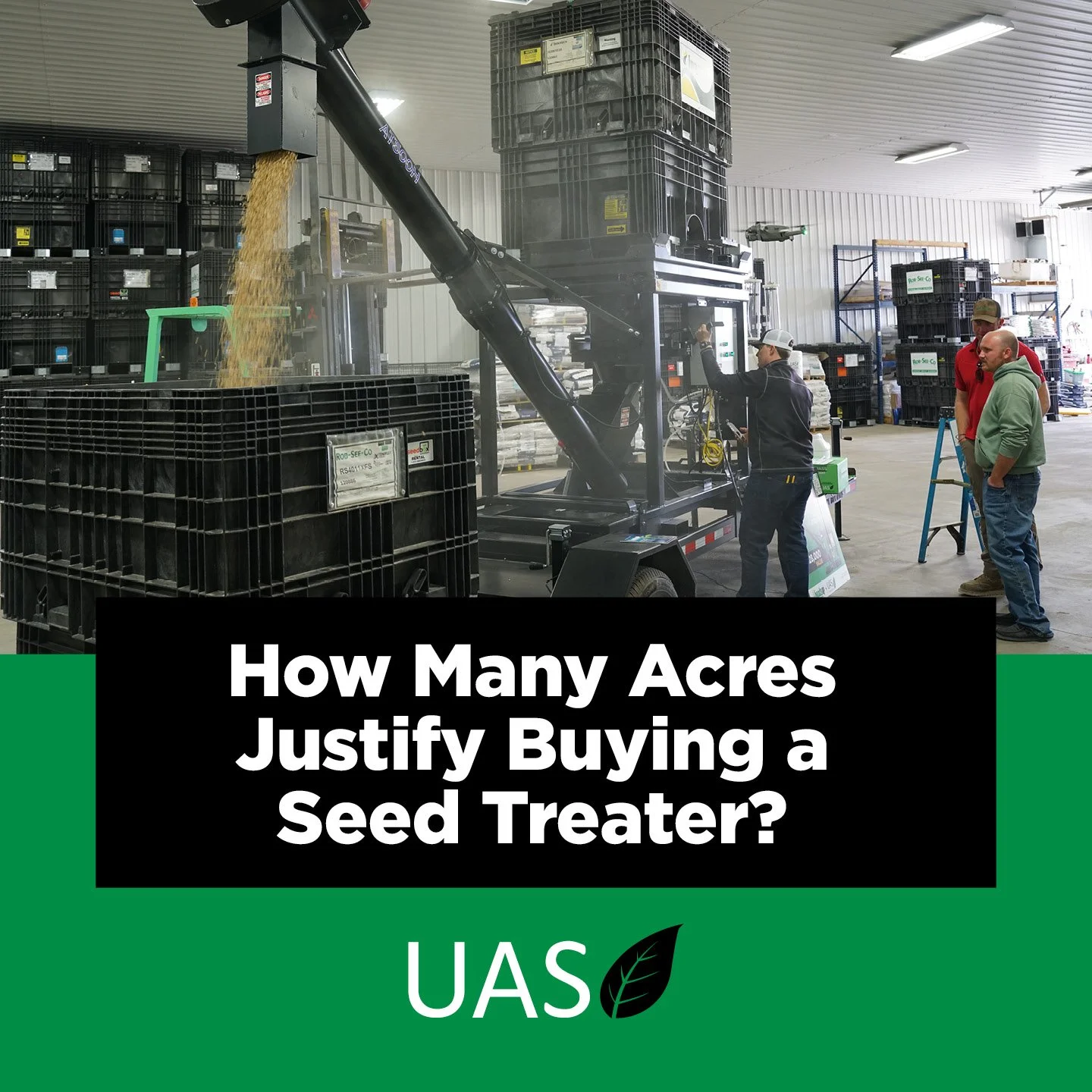
For many growers and seed companies, buying a seed treater starts with one question: "Do I have enough acres to justify it?"
It's a fair question—but it's not the only one. While acreage certainly matters, the return on investment often comes from something much bigger:
Lower treatment costs
Better scheduling
Improved flexibility
Higher-quality application
Eliminating the hassle of coordinating with someone else's timeline
For some operations, a seed treater pays for itself surprisingly quickly. For others, custom treating may still make the most sense. Let's walk through the factors that matter most.
There's No Magic Acre Number
One of the biggest misconceptions is that there's a universal break-even point. There isn't.
We've seen operations with fewer than 1,000 acres justify a seed treater because they produce seed, treat multiple crops or value complete control over their schedule. We've also seen larger farms continue custom treating because it fits their business model.
The better question isn't always: "How many acres do I farm?" but instead "How valuable is flexibility to my operation?"
Start With Acres
As a general guideline, growers who consistently treat 1,000 or more acres annually often begin seeing the strongest return on owning their own equipment.
That acreage may include:
Soybeans
Corn
Wheat
Cover crops
Seed production acres
If you're treating multiple crops throughout the year, your equipment works harder—and your investment pays back faster.
What Does Custom Treating Cost?
Every operation is different. Some growers pay by the unit. Others pay per hundredweight. Others bundle treatment into seed purchases. The important question is:
How much are you paying someone else every year to apply treatments?
Now compare that annual expense to owning equipment. Many growers are surprised how quickly those costs add up.
Time Has Value Too
Money isn't the only consideration. Owning your own seed treater gives you something growers rarely have enough of: control.
Instead of waiting in line during busy treating season, you decide:
When to treat.
What products to use.
How much to treat.
When to switch products.
When to stop.
That flexibility can be especially valuable during narrow planting windows.
Treat Only What You Need
Another advantage? You don't have to commit months ahead of planting. Weather changes. Markets change. Plans change. When you own the equipment, you can treat seed closer to planting and adjust as conditions change.
Improve Seed Treatment Quality
Modern box-to-box treaters provide consistent application rates and excellent coverage.
That means:
Accurate product placement
Reduced waste
Cleaner seed
Better consistency from box to box
Application quality matters just as much as product selection.
Who Benefits Most?
Some operations tend to see especially strong returns.
Growers treating 1,000+ acres
The more acres treated annually, the easier it becomes to spread equipment costs.
Seed companies
Treat multiple varieties. Switch products easily. Treat on demand. Maintain quality control.
Research plots
Need small batches? Need frequent product changes? A box-to-box treater provides tremendous flexibility.
Don't Forget About Wheat
Many growers think of seed treaters only for soybean season. But adding wheat changes the equation.
If you're treating:
Soybeans
Corn
Wheat
your equipment stays productive much longer throughout the year.
Consider Your Labor
One question often overlooked: Who will operate the treater?
Today's equipment is far more user-friendly than many growers expect. Semi-automatic and fully automated systems reduce labor while improving consistency. For many operations, one person can comfortably manage the treating process.
Semi-Automatic or Fully Automatic?
Choosing the right equipment depends on your operation.
Semi-Automatic
Great for growers looking for:
Lower upfront investment
Excellent flexibility
Simple operation
Fully Automatic
Ideal for:
Larger acreages
Seed companies
Higher throughput
Minimal operator involvement
Both provide accurate, professional-quality seed treatment.
Questions to Ask Yourself Before Investing in a Treater
Before investing, consider:
How many acres do I treat each year?
Do I grow multiple crops?
Am I paying someone else to treat seed?
How much flexibility would I gain?
How much time would I save?
Do I want better control over my seed treatment program?
Could I treat for neighbors or customers?
The answers usually make the decision much clearer.
Why Growers Choose the AT500
The UAS AT500 Box-to-Box Seed Treater was designed for growers and seed professionals who want professional-quality treating without unnecessary complexity.
Benefits include:
Accurate application
Excellent seed coverage
Easy calibration
Quick product changes
Reliable performance
Available in semi-automatic and fully automated models
Whether you're treating soybeans, corn or wheat, the AT500 helps put you in control of your seed treatment program.
Key Takeaways
There is no universal acreage requirement.
Many operations treating 1,000+ acres begin seeing strong ROI.
Time savings often matter as much as dollars saved.
Owning equipment provides flexibility during planting season.
Multiple treated crops improve equipment payback.
Better application quality leads to better consistency.
Frequently Asked Questions
Is 1,000 acres enough to own a seed treater?
For many growers, yes. Operations treating around 1,000 acres or more often find that the investment becomes easier to justify, especially when treating multiple crops.
Does owning a seed treater save money?
It can. Many growers reduce annual custom treatment costs while gaining greater flexibility and control over their seed treatment program.
Can I treat soybeans, corn and wheat with the same equipment?
Yes. Box-to-box treaters are designed to handle multiple crop types and treatment programs.
Is a fully automated treater worth it?
Larger operations and seed companies often benefit from increased automation, while many growers find semi-automatic systems fit their needs perfectly.
Can I order now and receive it later?
Absolutely. UAS can work with your schedule and arrange delivery when you're ready.