
Nematicide Seed Treatment for Corn & Soybeans
PROTECT YOUR ROOTS. PROTECT YOUR YIELD POTENTIAL.
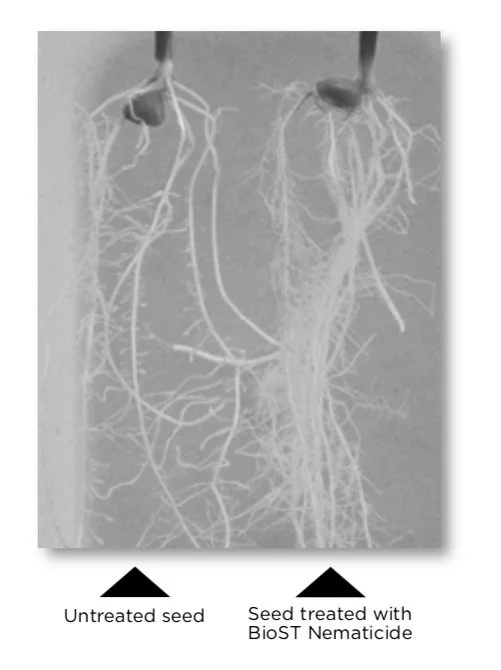
Nematodes attack where you can’t see them—below the soil surface. These microscopic pests feed on developing roots, limiting root growth and putting young plants at a disadvantage from the start.
Unified Ag Solutions offers nematicide seed treatment for corn and soybeans designed to protect the root zone from damaging nematode pressure early in the season.
From soybean cyst nematode (SCN) and root-knot nematodes in soybeans to lesion, lance, sting and other nematodes in corn, UAS can help you build the right seed treatment program for your acres.
Nematodes are microscopic, wormlike organisms that live in the soil. Plant-parasitic nematodes feed on plant roots, damaging root systems and limiting a plant’s ability to take up water and nutrients.
The challenge? Nematode damage isn't always obvious above ground.
Depending on the crop and nematode species, symptoms can include poor emergence, uneven stands, stunted plants, yellowing, reduced root development and areas of the field that simply don't perform like they should.
For soybeans, soybean cyst nematode is an especially important concern. Nebraska Extension notes that resistant soybean varieties remain the most effective management tool and that nematode-protectant seed treatments can be considered as part of an SCN management program.
WHAT ARE NEMATODES?
COMMON NEMATODES IN SOYBEANS
Soybean Cyst • Root-Knot • Reniform • Lesion • Lance • Sting • Stunt
COMMON NEMATODES IN CORN
Lesion • Spiral • Stunt • Dagger • Lance • Root-Knot • Sting • Needle • Stubby Root


BIOST® 2G NEMATICIDE + INSECTICIDE
THE NEXT GENERATION OF NEMATODE PROTECTION.
BIOST® 2G Nematicide + Insecticide brings nematode suppression and early-season insect activity together in one low-use-rate biological formulation.
BIOST® 2G provides activity against a broad range of plant-parasitic nematodes while adding another layer of early-season protection against soil-borne insect pests.
BIOST® 2G TARGETS:
NEMATODES
Soybean cyst
Root-knot
Reniform
Lesion
Lance
Sting
Stunt
EARLY-SEASON INSECTS
Corn rootworm larvae
Seed maggots
Wireworms
Other soil-borne insect pests
It’s another way UAS can help build more complete protection into your seed treatment program from the start.

BIOST® NEMATICIDE 100
BROAD-SPECTRUM NEMATICIDE SEED TREATMENT
BIOST® Nematicide 100 gives growers another tool for protecting corn and soybean roots from damaging nematode pressure.
Available as a standalone product or as part of select N-Compass seed treatment blends, BIOST® Nematicide can be incorporated into a complete seed treatment program based on your crop, acres and pest pressure. UAS currently lists BIOST® Nematicide within its broader seed-treatment and biological portfolio.

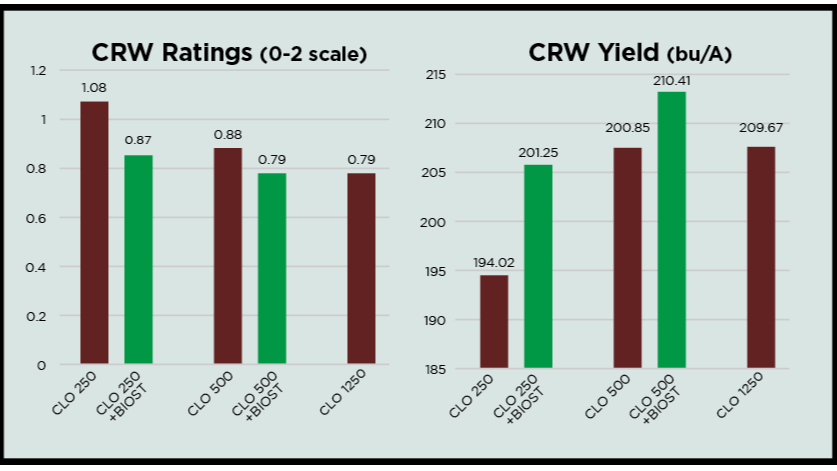
BIOST® NEMATICIDE 100 & CORN ROOTWORM
In multi-year research trials over 5 years, BIOST® Nematicide 100 has also shown to increase efficacy against CRW by lowering root damage and maintaining yield potential when compared to use of higher rates of neonicotinoid insecticides.
SOYBEAN NEMATICIDE SEED TREATMENT
START WITH SCN. PROTECT AGAINST MORE.
Soybean cyst nematode (SCN) is one of the biggest nematode concerns for soybean growers—but it isn't the only one.
BIOST® nematicide options can help protect soybean roots against multiple plant-parasitic nematodes, including soybean cyst, root-knot and reniform nematodes, with BIOST® 2G providing activity against an even broader spectrum. Nematicide seed treatment should be viewed as one part of an overall nematode-management strategy alongside practices such as resistant soybean varieties, crop rotation and field monitoring—not as a replacement for those practices.

CORN NEMATICIDE SEED TREATMENT
PROTECTION BELOW GROUND STARTS AT THE SEED.
Corn can face pressure from a wide range of plant-parasitic nematodes, including lesion, spiral, stunt, dagger, lance, root-knot, sting, needle and stubby-root nematodes.
Adding nematicide to your corn seed treatment program provides another layer of early-season root-zone protection.
And with BIOST® 2G Nematicide + Insecticide, growers can combine nematode suppression with activity against early-season soil pests, including corn rootworm larvae, seed maggots and wireworms.
DO I NEED A NEMATICIDE SEED TREATMENT?
You can't always diagnose nematode pressure by looking across the field. If you've experienced unexplained yield loss, stunted plants, uneven growth or poor root development, soil and root testing can help determine whether plant-parasitic nematodes are contributing to the problem.
And because nematode species and pressure can vary from field to field, the right treatment depends on what you're dealing with and where you're farming.
That's where UAS can help.