
Fields Flooded This Fall? Don't Forget About Inoculant Next Spring
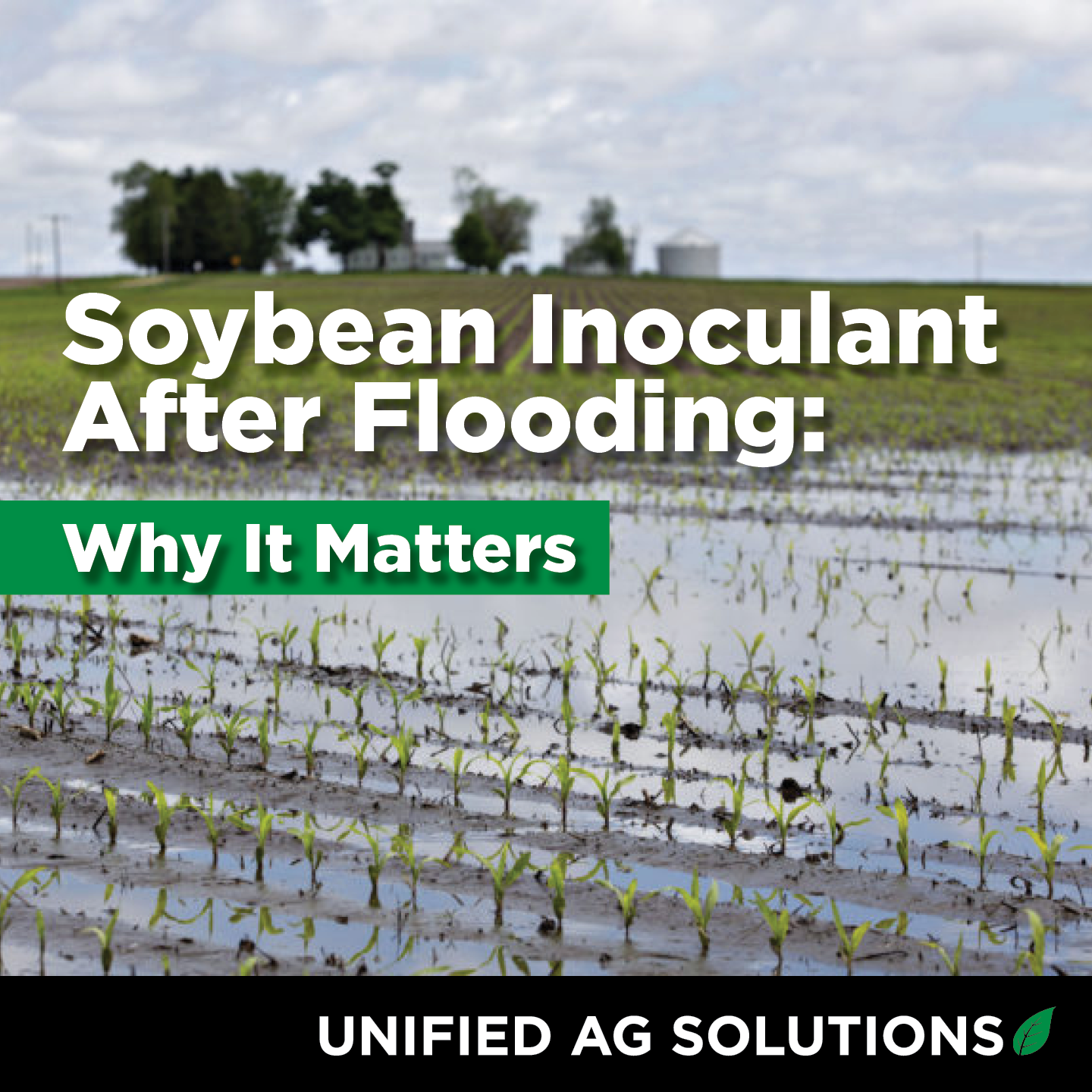
Heavy rainfall can affect more than this year's crop.
For many growers, September brought a lot more water than they wanted.
Parts of the Midwest experienced repeated rounds of heavy rainfall and flooding, with some areas receiving several inches of rain in a matter of hours. In southeast Nebraska and southwest Iowa, for example, a late-September storm produced a band of 3 to locally 10 inches of rain, including a record 6.15 inches in one day at the Lincoln Airport. Other portions of Iowa, Illinois, Indiana and Ohio also experienced significant September flooding. (source: National Weather Service)
As harvest continues and growers start thinking about 2027, there's an important question to ask:
Were any of the fields you're planning to plant to soybeans flooded or saturated for an extended period this year?
If the answer is yes, soybean inoculation should be part of the conversation for next spring.
What Does Flooding Have to Do With Soybean Inoculant?
Soybeans have a unique relationship with naturally occurring soil bacteria called Bradyrhizobium. These bacteria infect soybean roots and form nodules. Inside those nodules, they convert atmospheric nitrogen into a form the soybean plant can use—a process known as biological nitrogen fixation.
That relationship helps provide soybeans with much of the nitrogen they need throughout the growing season. But there's a catch:
Rhizobia need oxygen.
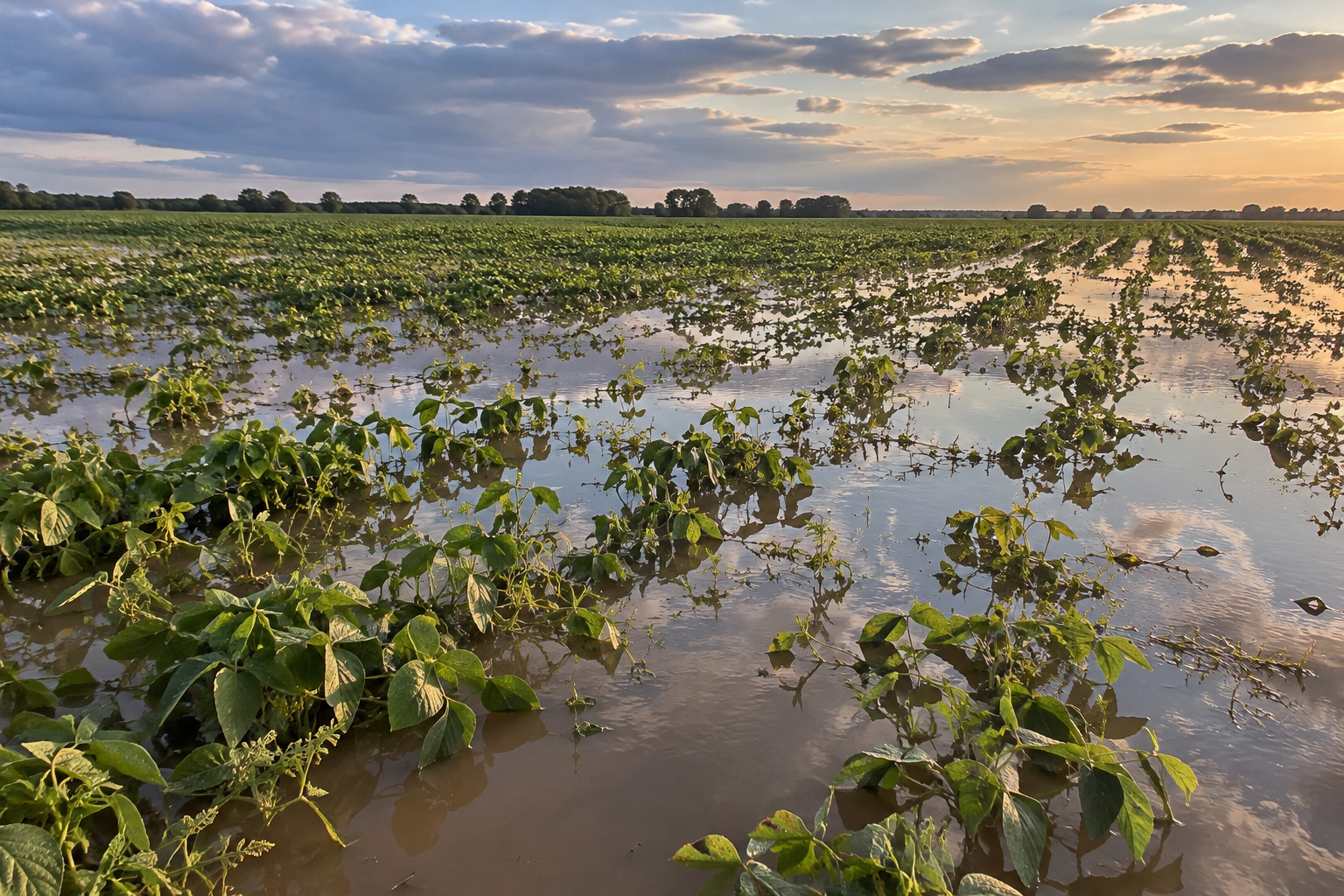
When soil remains flooded or saturated for an extended period, oxygen levels in the soil drop. Those anaerobic conditions can reduce nitrogen fixation and can also reduce the survival of the bacteria soybean plants depend on for nodulation the following season. (source: Integrated Crop Management)
That's why a field with a long history of soybeans shouldn't automatically be treated the same after significant flooding.
How Long Does a Field Need to Be Flooded Before It Matters?
There isn't one universal number that applies to every field. Duration matters, but so do soil type, drainage, temperature and the severity of the saturated conditions.
University recommendations vary somewhat. Iowa State specifically identifies fields flooded for more than a week as candidates for inoculation. Nebraska Extension also points to flooding lasting more than a week as potentially reducing bacterial survival and nitrogen fixation. Other Extension guidance uses different thresholds depending on the circumstances. (source: Integrated Crop Management)
The takeaway isn't that every field that had standing water for a day suddenly needs inoculant.
It's that fields subjected to prolonged flooding or saturation should be evaluated differently heading into next season.
Why Nodulation Matters So Much
Soybeans require a significant amount of nitrogen to produce a crop. Successful nodulation allows the soybean plant to work with Bradyrhizobium bacteria to fix atmospheric nitrogen throughout the growing season.
When nodulation is poor, nitrogen fixation can suffer.
Waterlogged conditions can be especially disruptive because soybean roots also need oxygen. Root growth and nodule formation are restricted in waterlogged soils and nitrogen fixation can fall dramatically until oxygen returns to the root zone. Adding a quality soybean inoculant at planting helps introduce viable rhizobia where the existing population may have been compromised.
Think of it as re-establishing the biological partnership the soybean plant will rely on all season.
Previously Flooded Fields Aren't the Only Ones to Consider
Flooding is just one reason a soybean field may benefit from inoculation.
It's also worth considering soybean inoculant when:
Soybeans haven't been grown in the field for three to five years
The field has never been planted to soybeans
Soil pH is unfavorable for rhizobia survival
Soils are particularly sandy
Previous soybean crops showed poor nodulation or nitrogen deficiency
Environmental stress may have reduced rhizobia populations
These are all situations identified in university recommendations as having a greater likelihood of benefiting from inoculation.

Plan Your 2027 Soybean Treatment Now
The best time to think about next year's seed treatment isn't when the planter is already rolling. Use what you learned from your fields this season to start building your 2027 plan.
If your soybean acres experienced extended flooding or saturation, talk with your UAS representative about adding a soybean inoculant to your seed treatment program.
UAS offers Surpass 120-Day Inoculant as part of a complete soybean treatment strategy, alongside customizable N-Compass seed treatment and N-Gage biologicals.
THE FIELD CHANGED. YOUR PLAN MAY NEED TO CHANGE WITH IT.
Don't assume last year's treatment program is automatically the right one for 2027. Look at what happened in your fields. Identify where flooding and other environmental stresses may have changed the equation. Then build a seed treatment and inoculant program around what those acres actually need.
Talk with UAS about your 2027 soybean treatment plan. Call 888-402-4787 or contact your UAS representative.