
Corn Disease Identification Guide: What to Look for When Scouting Corn
Corn Disease
Identification Guide:
What to Look for When Scouting Corn
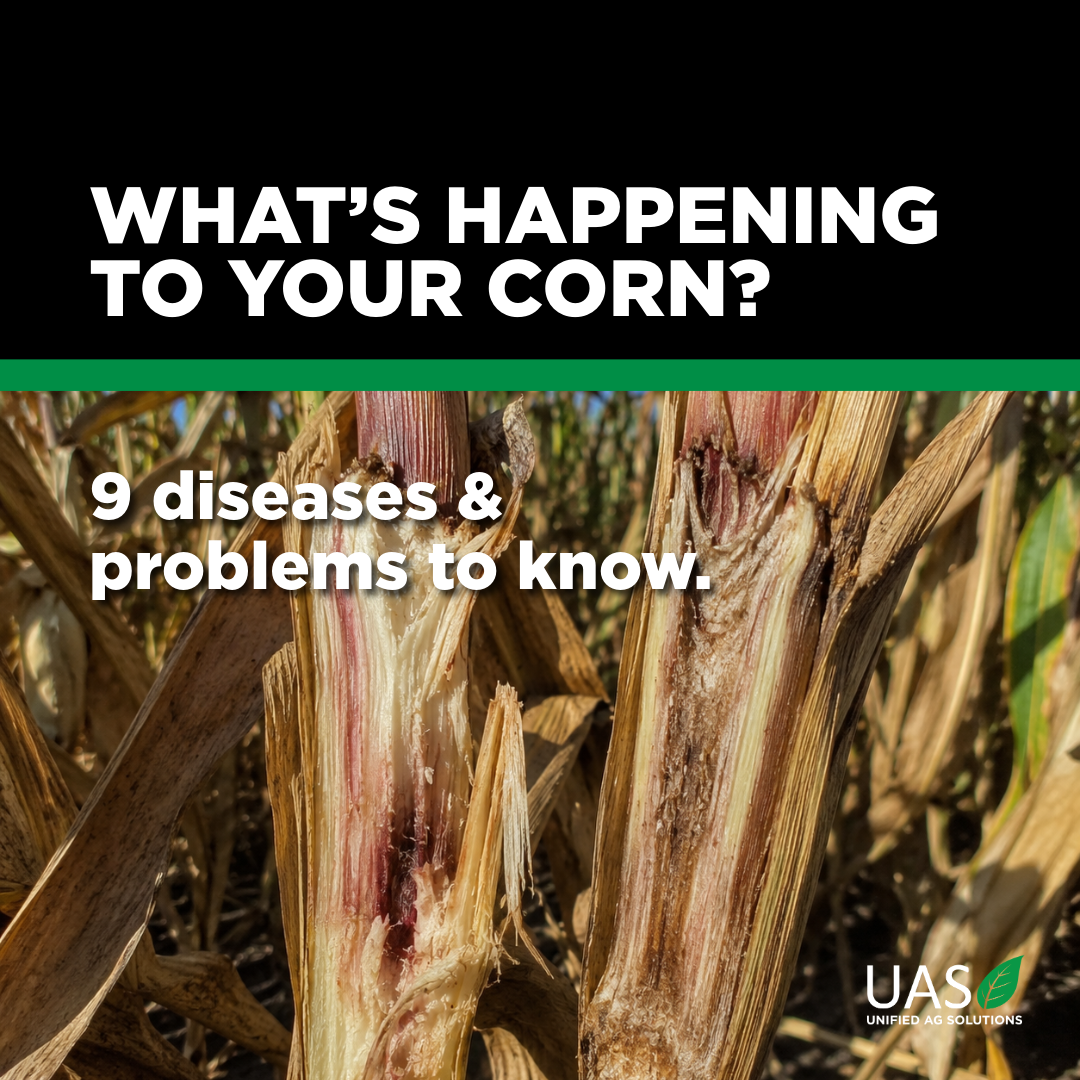
Black spots. Gray lesions. Orange pustules. Weak stalks. Rotted roots. There's a lot your corn crop can tell you if you know what to look for.
And just like soybeans, where the symptom appears can be just as important as what it looks like. Some corn diseases primarily affect leaves. Others attack stalks or roots. Some appear early, while others don't become obvious until reproductive stages or as the crop approaches maturity. Disease scouting should therefore change with crop stage and growing conditions.
Here's how to scout corn and identify nine diseases and problems worth knowing.
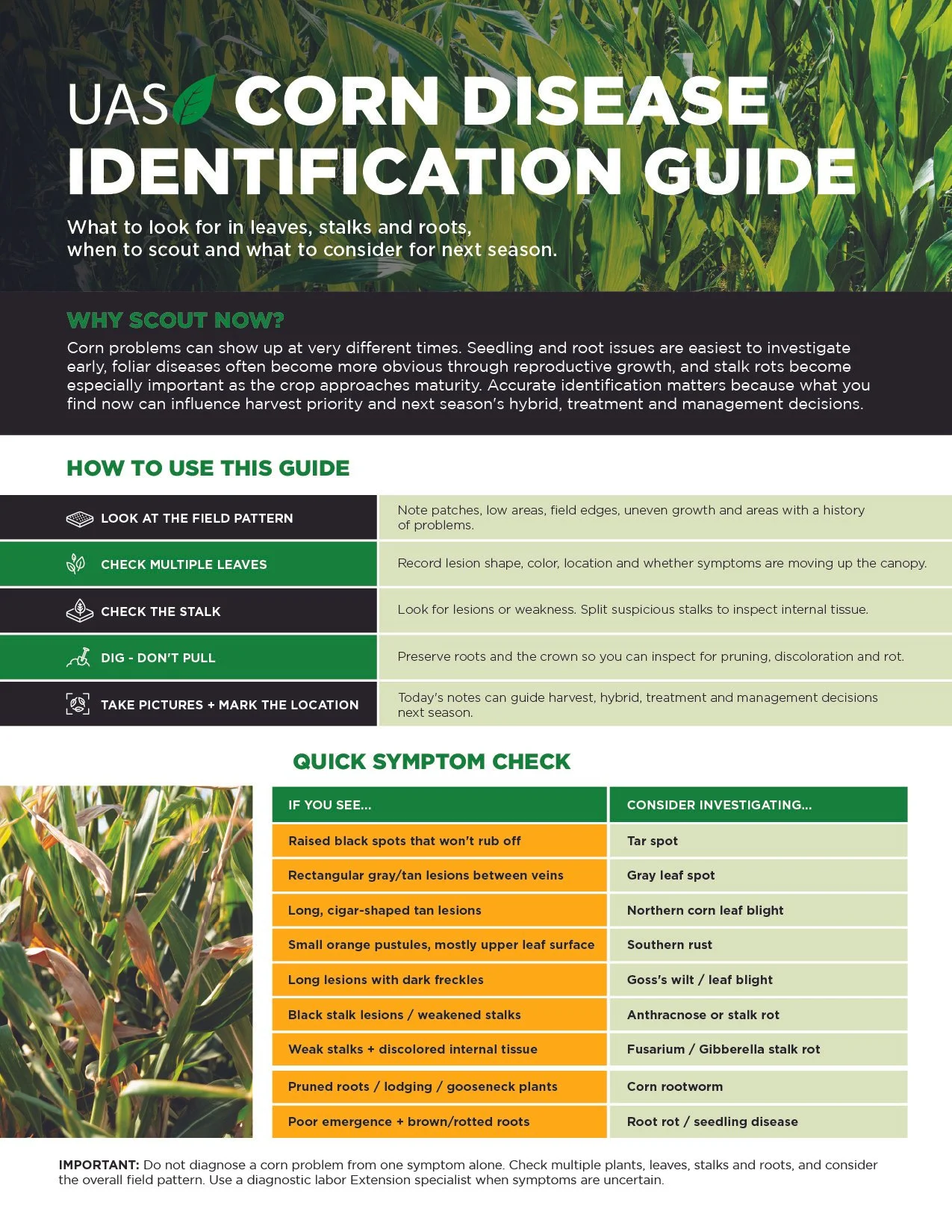
How to Scout Corn for Disease
Before diagnosing a disease from one leaf, look at the entire plant and field.
Look at the field pattern. Are symptoms concentrated in low areas, field edges, patches or continuous-corn acres?
Check multiple leaves. Note lesion shape, color, location and where symptoms occur in the canopy.
Check the stalk. Look for lesions and discoloration, and split suspicious stalks to inspect internal tissue.
Check the roots and crown. Dig plants rather than pulling them so you preserve as much of the root system as possible.
Take pictures and mark the location. What you find this season can help explain yield differences and guide decisions for next year.
1. Tar Spot in Corn
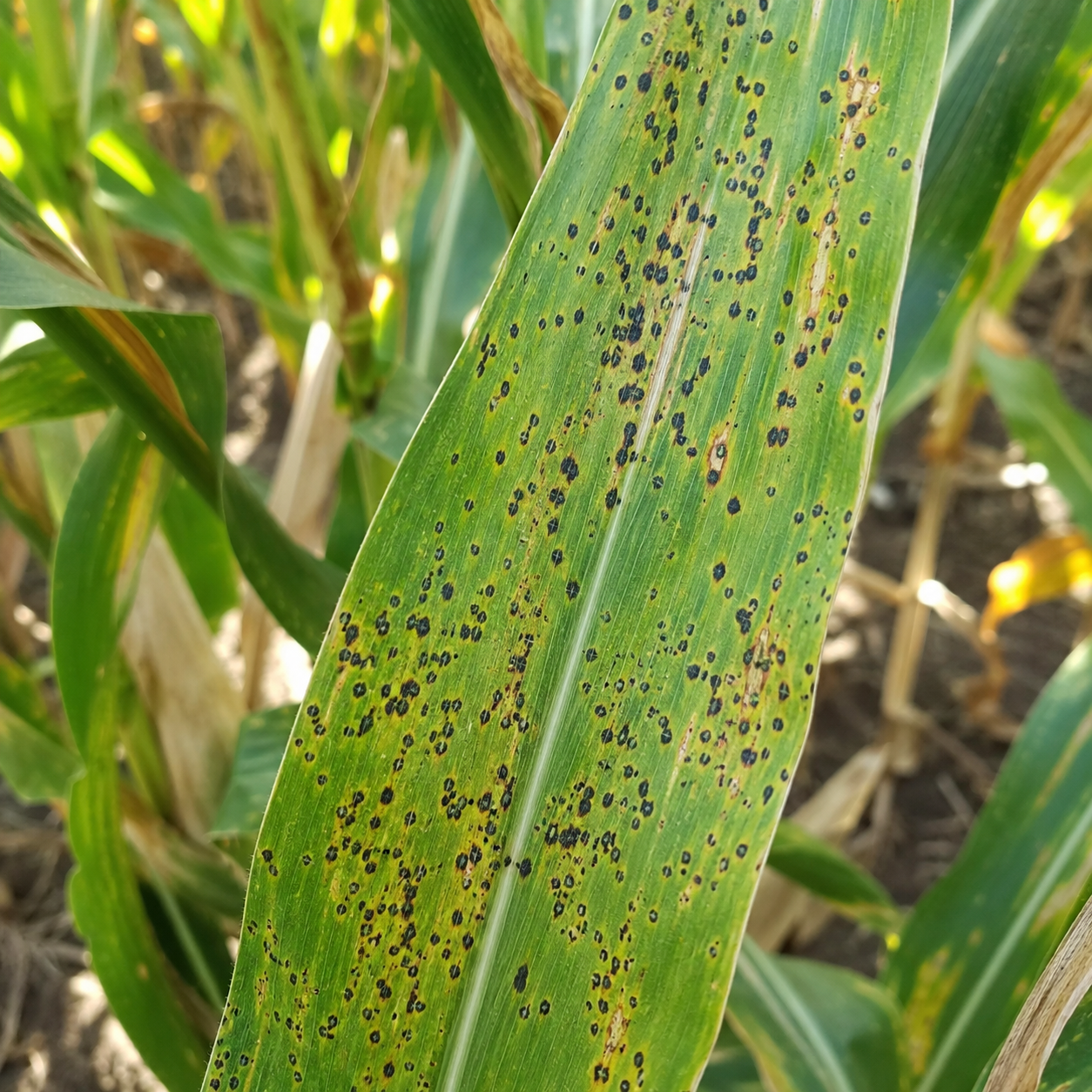
Tar spot has become an increasingly important disease across much of the Corn Belt.
Look for small, raised, black spots that resemble drops of tar. Unlike insect frass or dirt, tar spot structures cannot simply be wiped off the leaf. They can occur on both leaf surfaces, and some develop a surrounding tan "fisheye" lesion. Tar spot is most often observed during or after silking through grain fill, although it can occur earlier.
If you find it, record when symptoms first appeared and how severe they became. That information can help with future hybrid and fungicide decisions.
2. Gray Leaf Spot
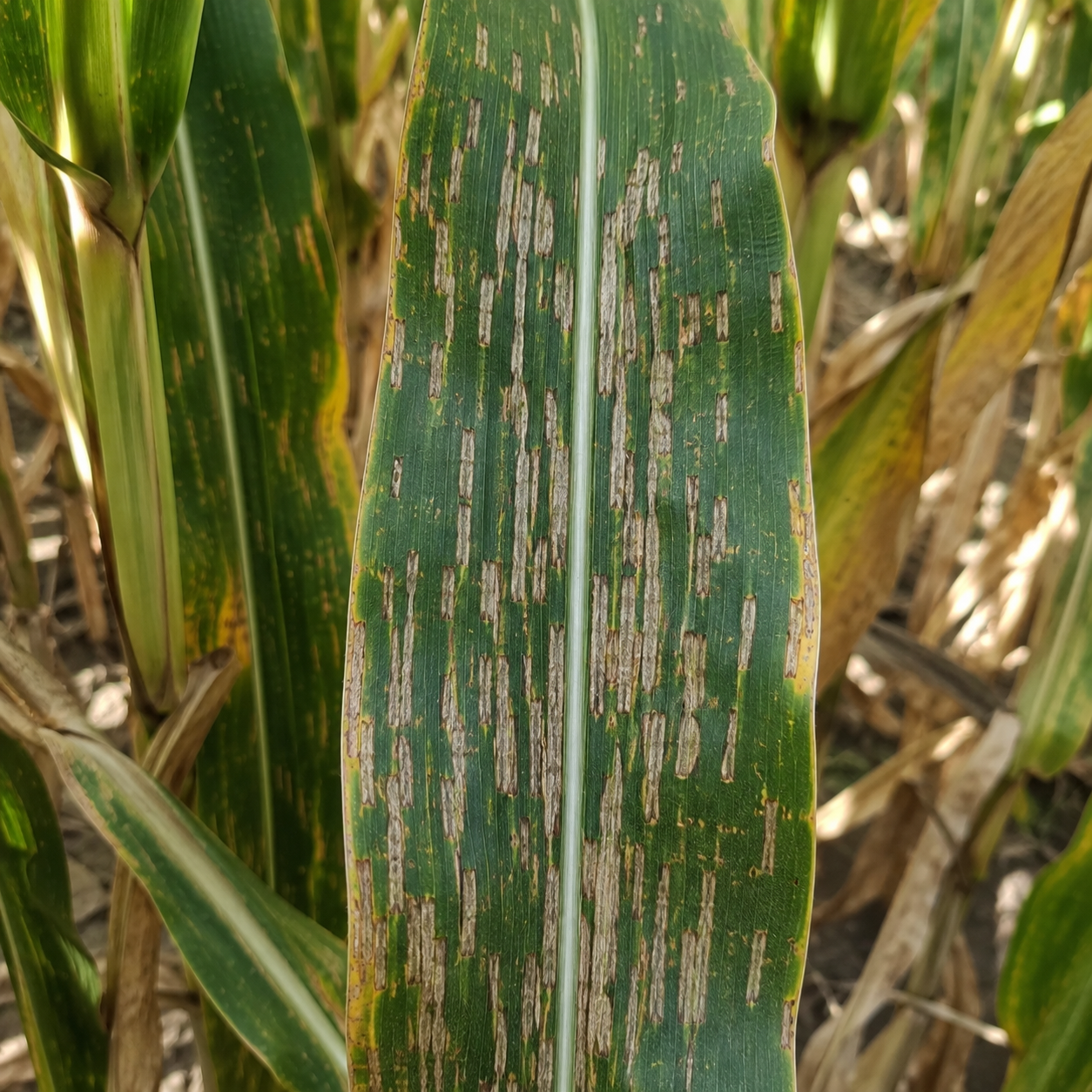
Gray leaf spot produces rectangular lesions that are restricted by the leaf veins.
Lesions become tan and eventually gray, with distinctive parallel edges that can help separate GLS from diseases producing more irregular lesions. Disease risk tends to increase under warm, humid conditions, particularly where infected corn residue is present. Hybrid resistance, rotation, residue management and field history should all factor into future management decisions.
3. Northern Corn Leaf Blight
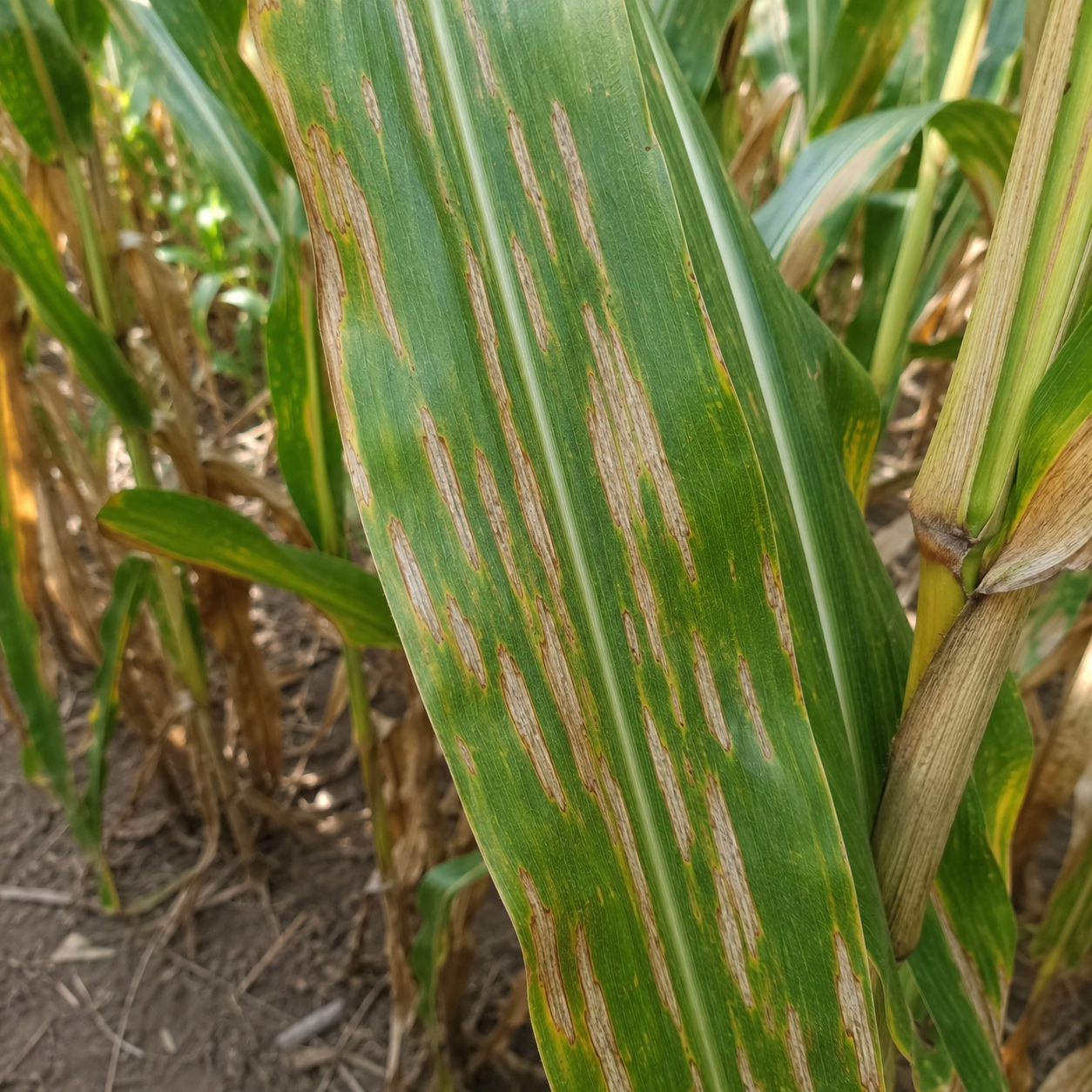
Northern corn leaf blight is known for its distinctive long, cigar-shaped lesions. Lesions may reach several inches long, beginning gray-green before becoming tan. Disease often starts on lower leaves and progresses upward. NCLB favors moderate temperatures and prolonged periods of moisture and commonly becomes noticeable around or after silking. When disease pressure is significant, consider resistant hybrids and field history when planning future crops.
4. Southern Rust
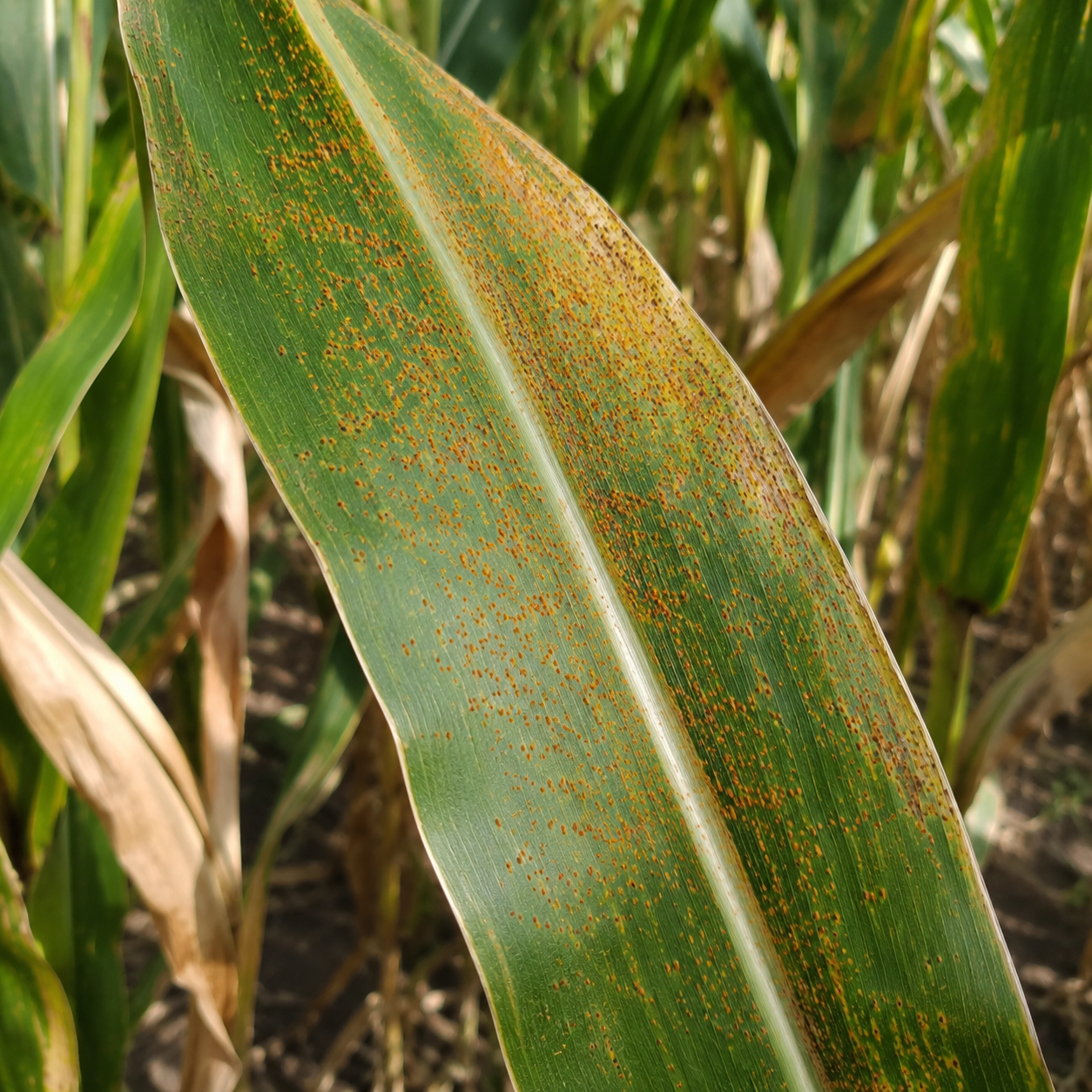
Southern rust produces numerous orange to light-brown pustules, typically concentrated on the upper surface of corn leaves. That's an important distinction from common rust, which generally produces darker brown pustules on both upper and lower leaf surfaces. Because southern rust spores move north during the growing season, regional disease reports can be useful alongside in-field scouting.
5. Goss's Wilt and Leaf Blight
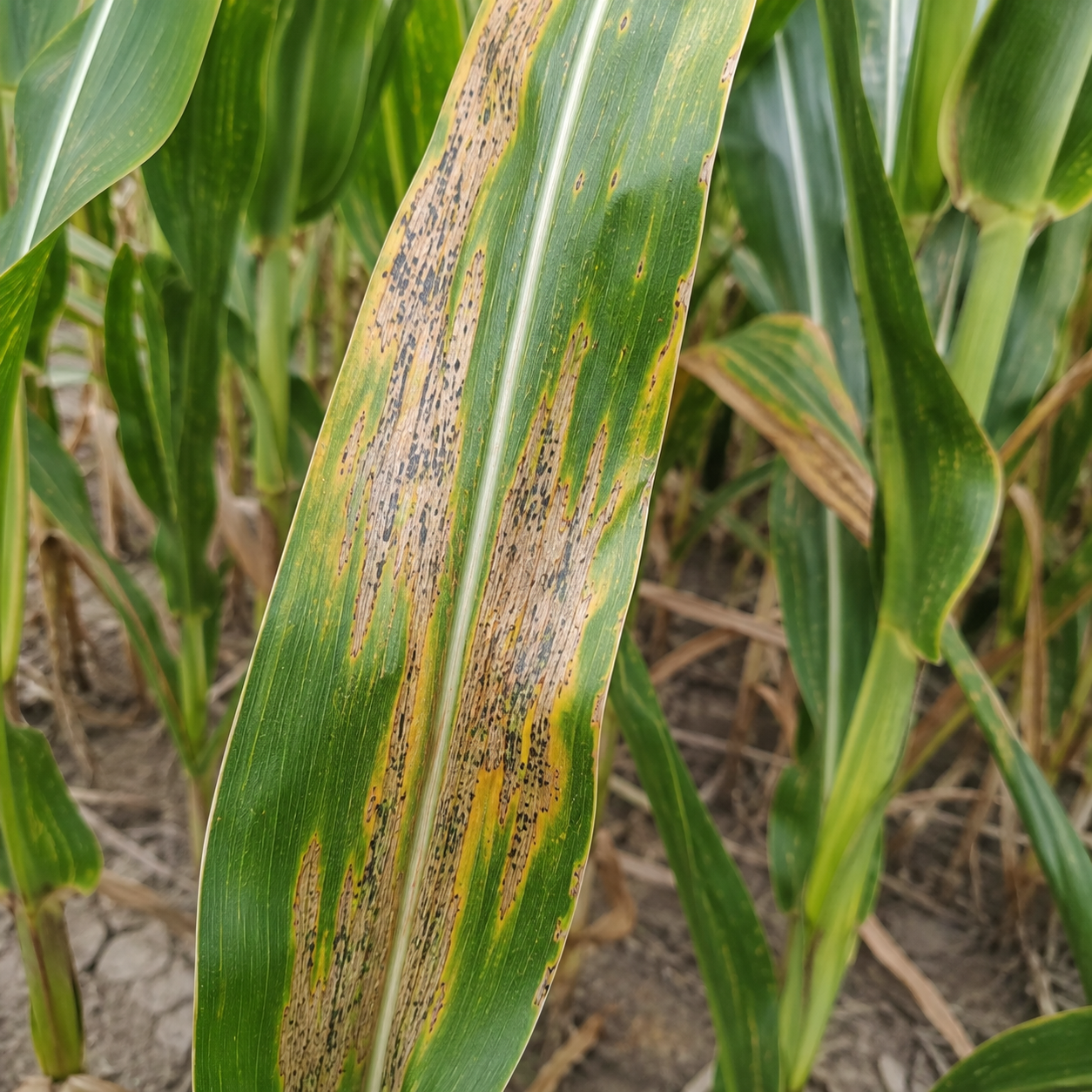
Goss's wilt is a bacterial corn disease. Look for long lesions that may appear water-soaked before becoming tan or gray. Dark green or black freckles within or around the lesions are a useful identifying characteristic.
Disease can be associated with infected residue and plant injury such as hail. Because Goss's wilt is bacterial, correct diagnosis is particularly important—a fungicide intended for fungal foliar diseases isn't a treatment for a bacterial disease.
6. Anthracnose
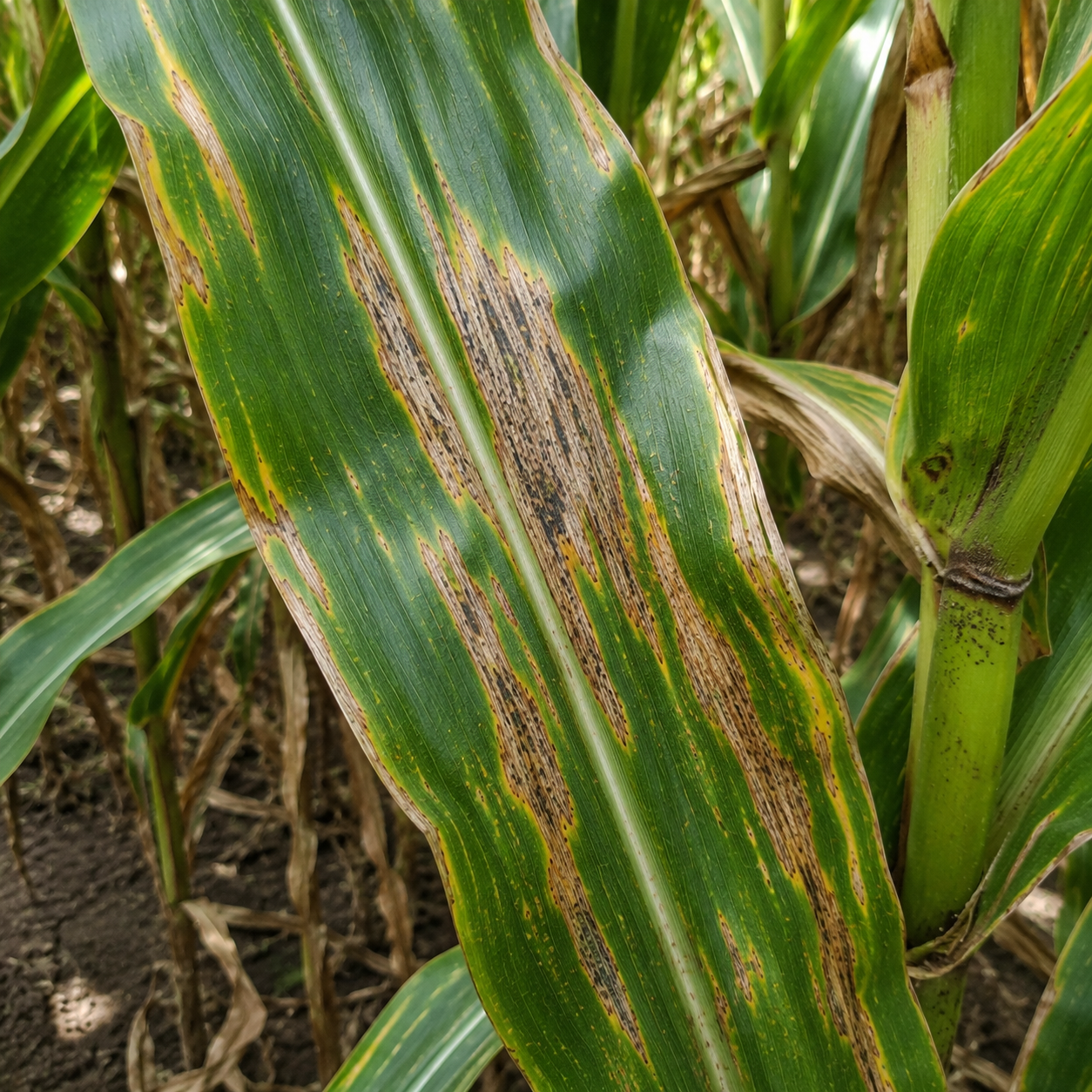
Anthracnose can affect both corn leaves and stalks. Earlier symptoms may appear as leaf blight, while later-season anthracnose stalk rot can contribute to stalk weakness and lodging.
When scouting near maturity, look beyond the leaves. Examine the lower stalk for dark, shiny discoloration and check stalk strength. Fields showing significant stalk deterioration may need to be prioritized at harvest.
7. Fusarium and Gibberella Stalk Rot
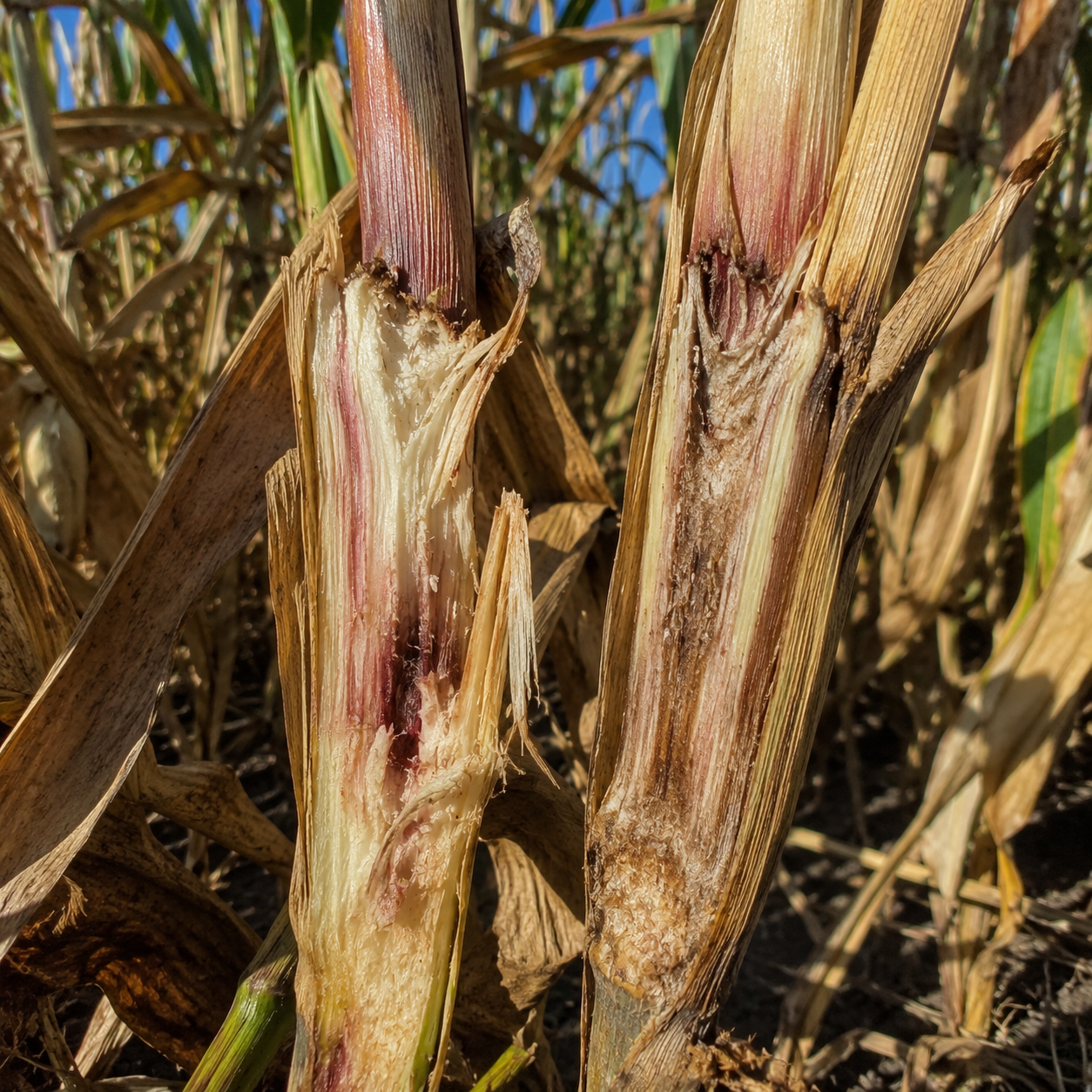
Stalk rots become especially important as corn approaches maturity. Look for premature plant death, weak stalks and internal discoloration. When you split affected stalks, the internal tissue may appear shredded or discolored.
Stalk diseases aren't just a next-year problem. They can become a this-harvest problem if weakened plants begin lodging. Document problem areas and check stalk integrity before determining harvest order.
8. Corn Root Rot and Seedling Disease
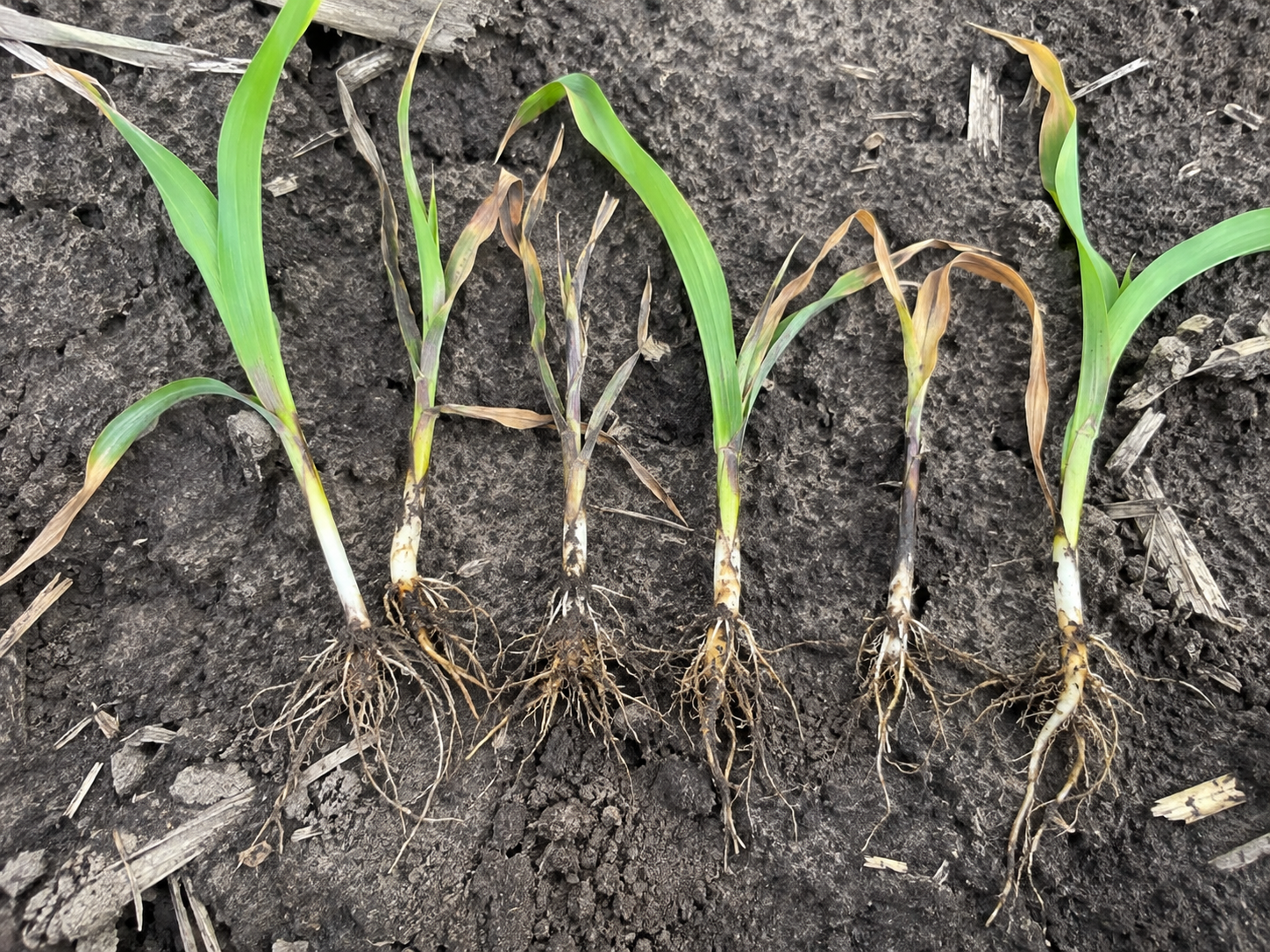
Some of the most important disease scouting happens long before tasseling. Poor emergence, stunted plants and uneven stands can point toward seedling or root disease.
Dig affected plants and inspect the roots for browning, soft tissue, decay and reduced root development. Because multiple pathogens can produce similar symptoms, laboratory testing may be necessary for a specific diagnosis.
Field drainage, planting conditions and your seed treatment package are all worth reviewing before planting the field again.
9. Corn Rootworm
Corn rootworm isn’t a disease, but it’s an important problem to watch for while scouting corn—especially in fields with a history of pressure.
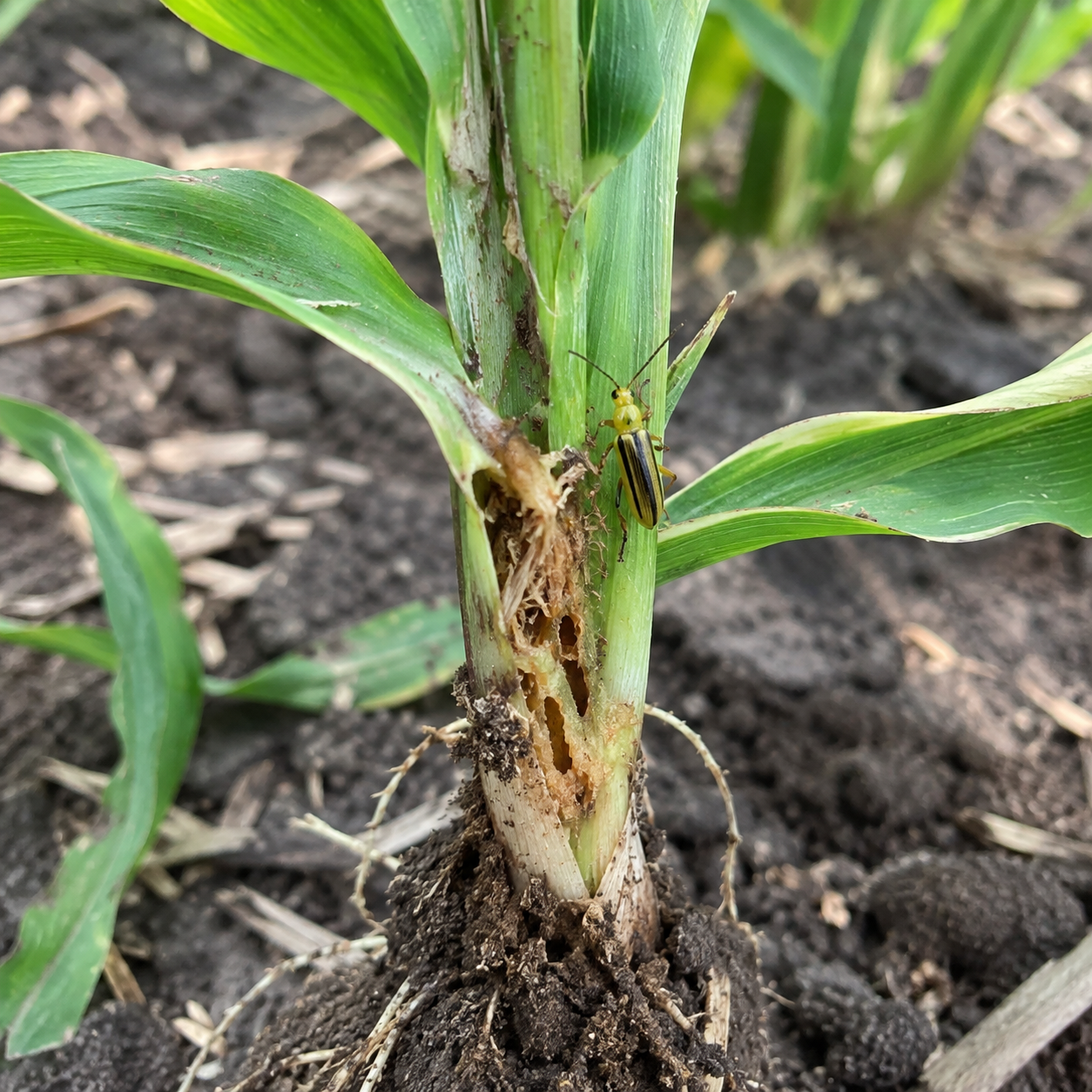
Rootworm larvae feed on corn roots below ground, which can reduce the plant’s ability to take up water and nutrients and leave plants more susceptible to lodging. Aboveground, damaged plants may appear stressed, stunted or develop the characteristic “gooseneck” shape as lodged plants attempt to grow upright again.
What to Look For
Dig plants rather than pulling them and carefully remove soil from the root system. Look for pruned or missing root nodes, feeding scars and reduced root mass. During the season, adult rootworm beetles may also be visible feeding on silks, pollen and other plant tissue.
What Should You Consider for Next Season?
If you find significant rootworm pressure, document affected areas and consider your field history, crop rotation, hybrid/trait selection and other rootworm management options when planning next year's crop. Most importantly, scout and document pressure now. What you find this season can help you build a more targeted rootworm management plan for next year.
Don't Just Identify the Disease. Record It.
Disease scouting shouldn't end when you figure out what's wrong.
Record:
Where you found it
When symptoms appeared
Crop growth stage
Hybrid
Field conditions
Disease severity
Photos of symptoms
Yield performance at harvest
Those observations give you something much more useful than "we had some disease out there last year." They give you information you can actually use when planning the next crop.
What You Find This Year Can Help Build Next Year's Treatment Plan
Not every corn disease can be prevented or managed through seed treatment. But identifying what happened in your field can help you make better decisions about hybrid selection, seed treatment, crop rotation, field management, fungicide planning and harvest priorities.
That's the real value of scouting. See something you aren't sure about? Talk to UAS.
Products. Equipment. Expertise. Support. Everything Seed Treatment.