
Seed Treatment Trends to Watch in 2026
As growers plan for the 2026 season, seed treatment continues to evolve beyond basic protection. What used to be a conversation centered solely on fungicides and insecticides is now expanding into biological performance, plant health, and long-term soil function.
Two trends stand out heading into this year:
the continued growth of biological seed treatments and bio-stimulants, and
a stronger demand for sustainable and eco-friendly treatment options that still deliver measurable results.
Here’s what’s shaping seed treatment decisions in 2026—and how those trends are showing up in real-world programs.
Biological Seed Treatments Move From “Optional” to Foundational
Biologicals are no longer viewed as experimental or supplemental. In many programs, they’ve become a core part of the seed treatment stack, especially where early vigor, nutrient efficiency, and stress management matter.
Growers are increasingly looking for products that:
Improve root development and early emergence
Enhance nutrient uptake, especially nitrogen and phosphorus
Help crops handle cold, wet soils and early-season stress
Complement traditional chemistry without sacrificing flowability or consistency
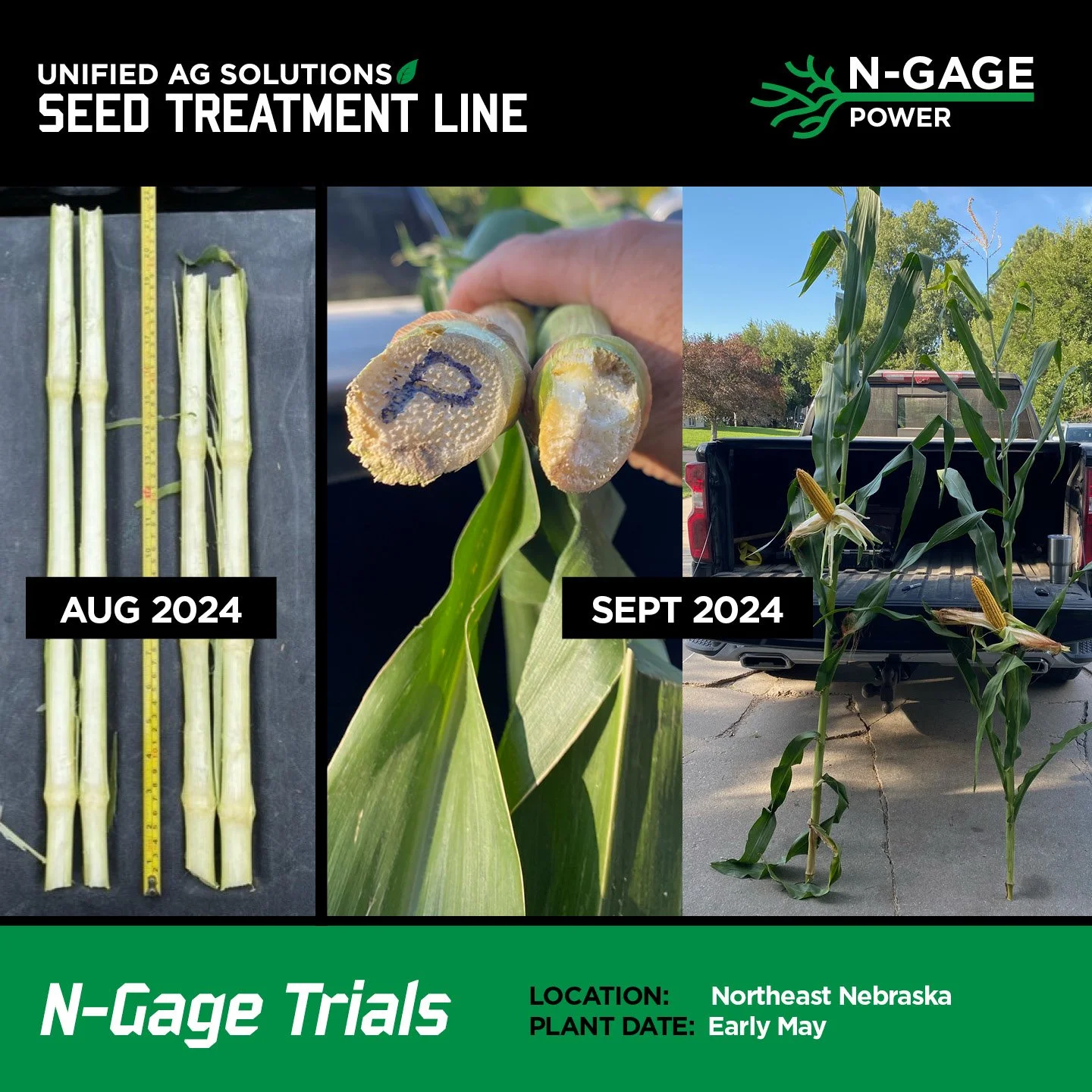
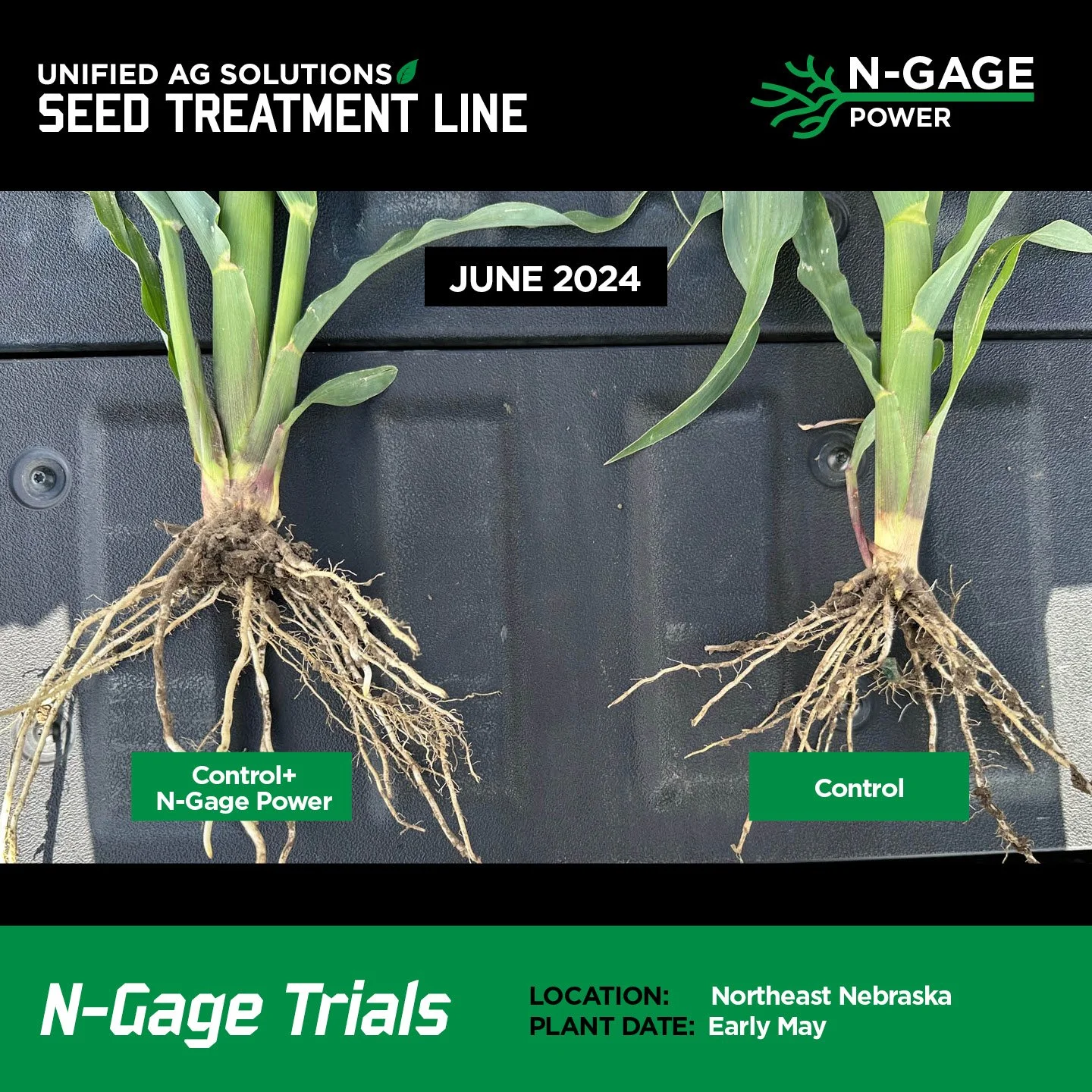
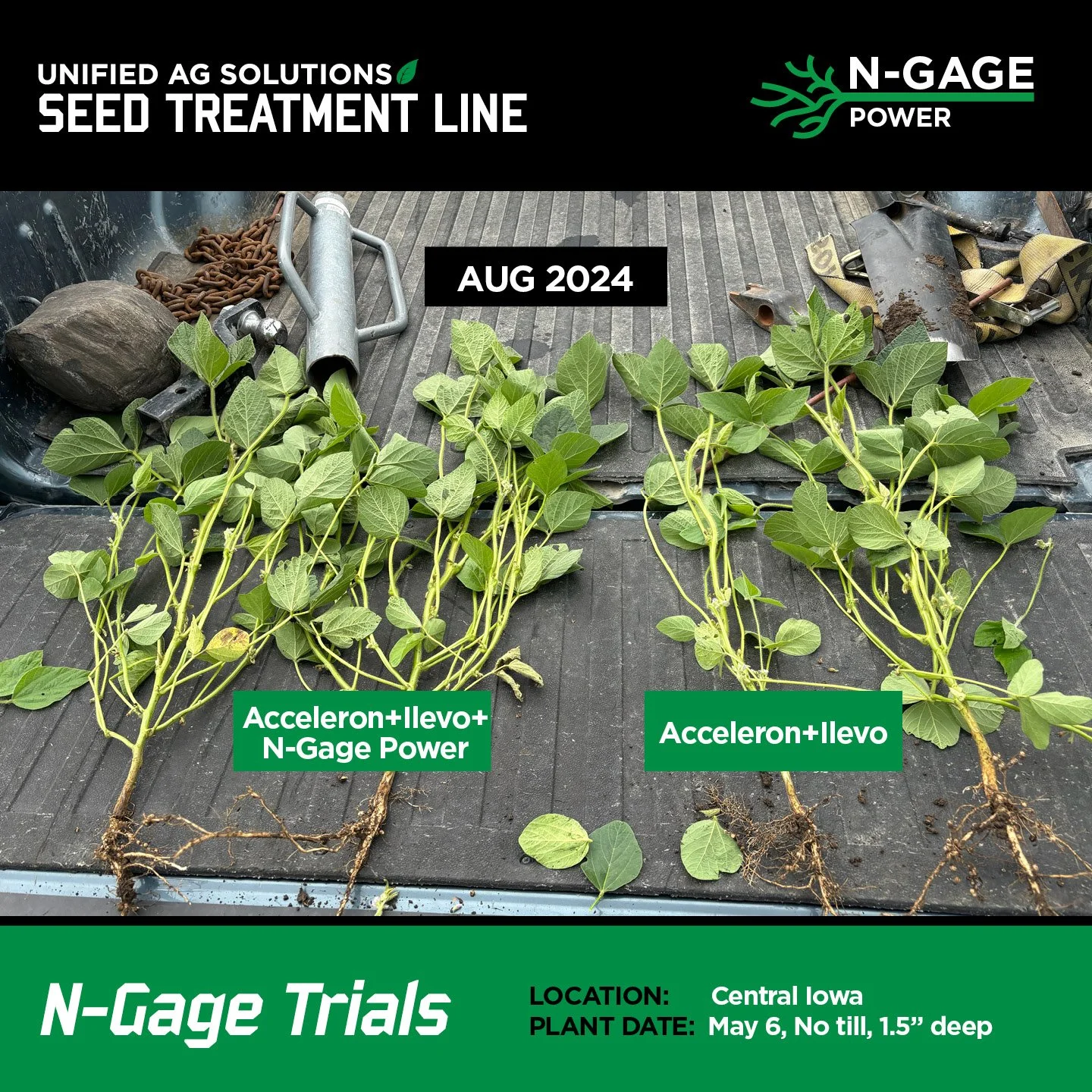
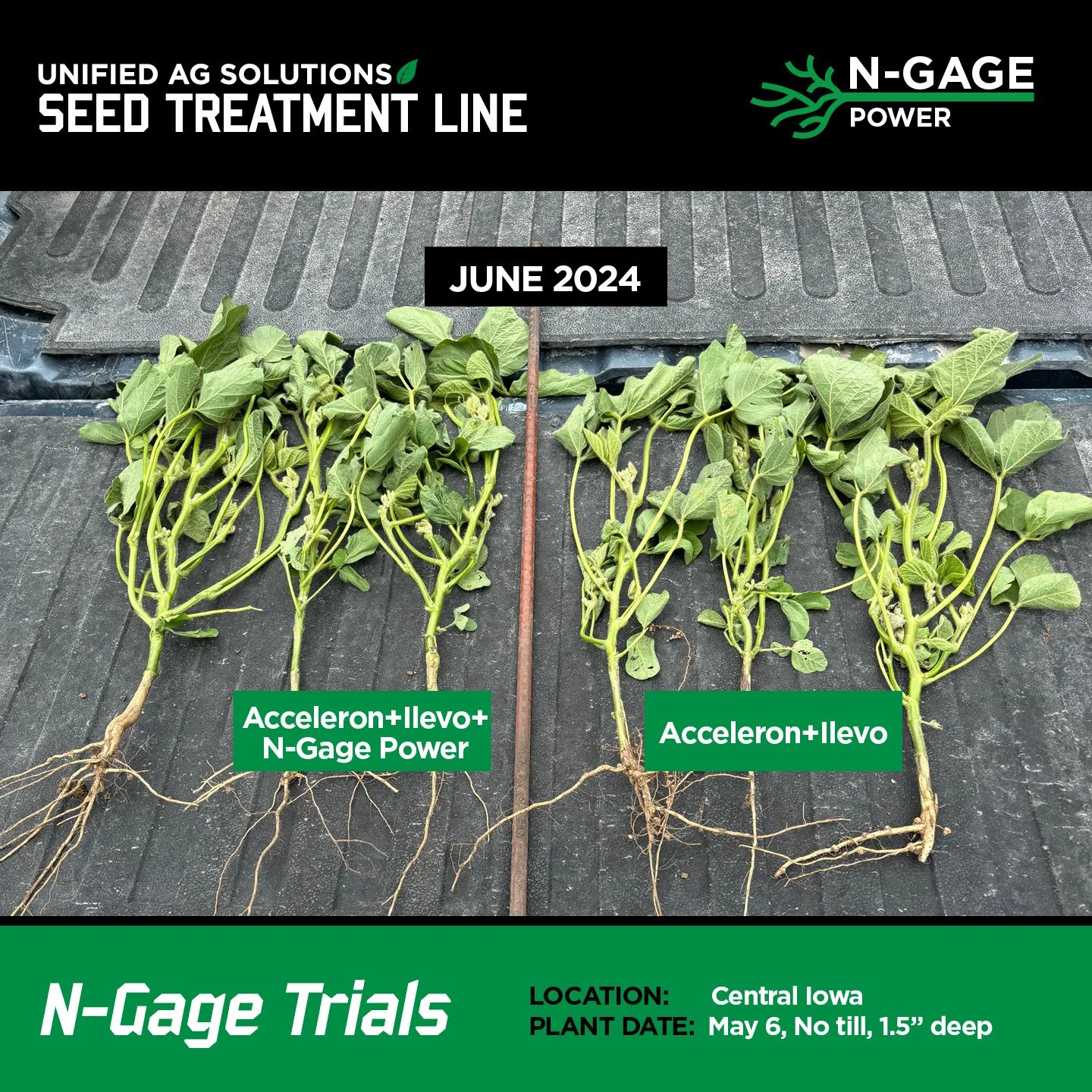
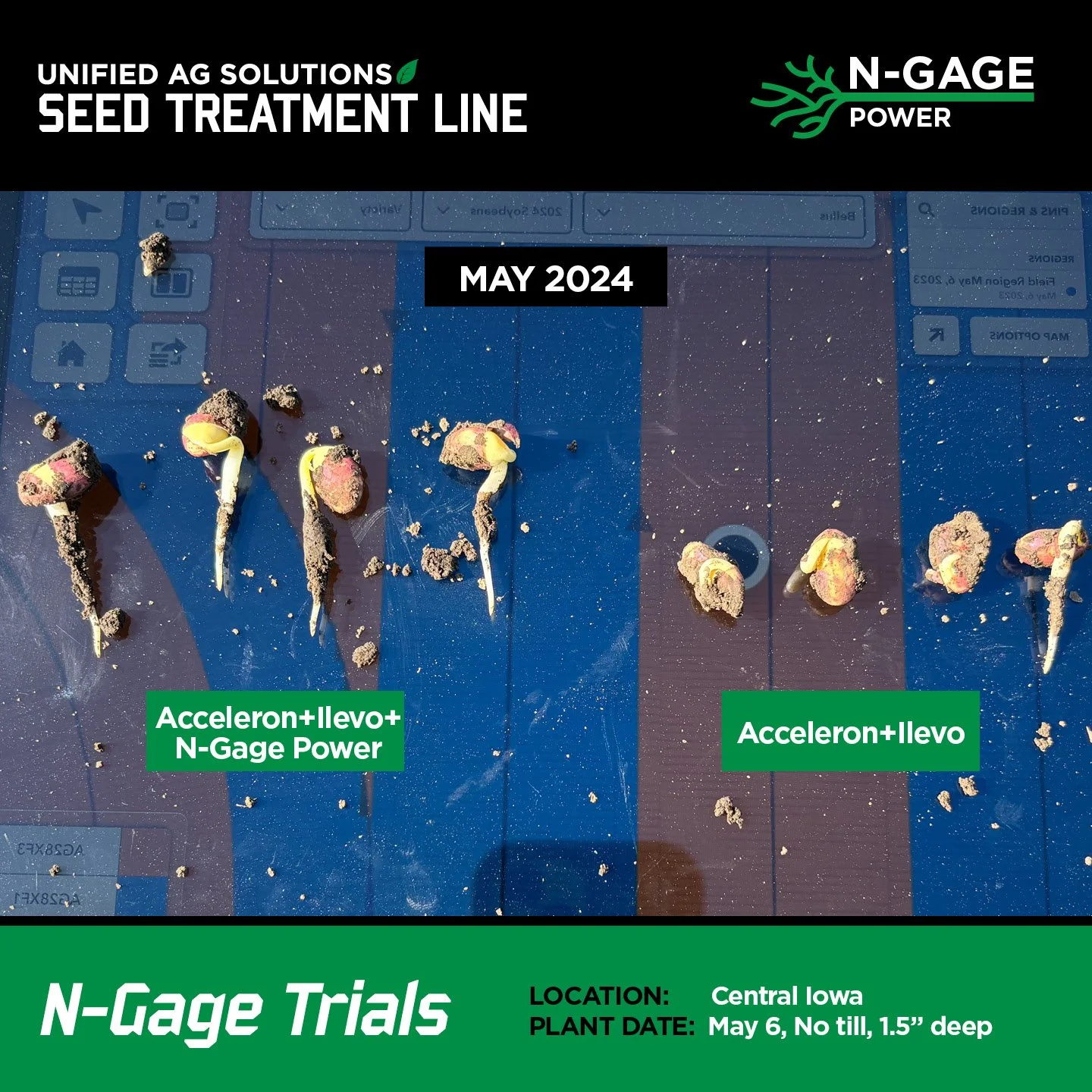
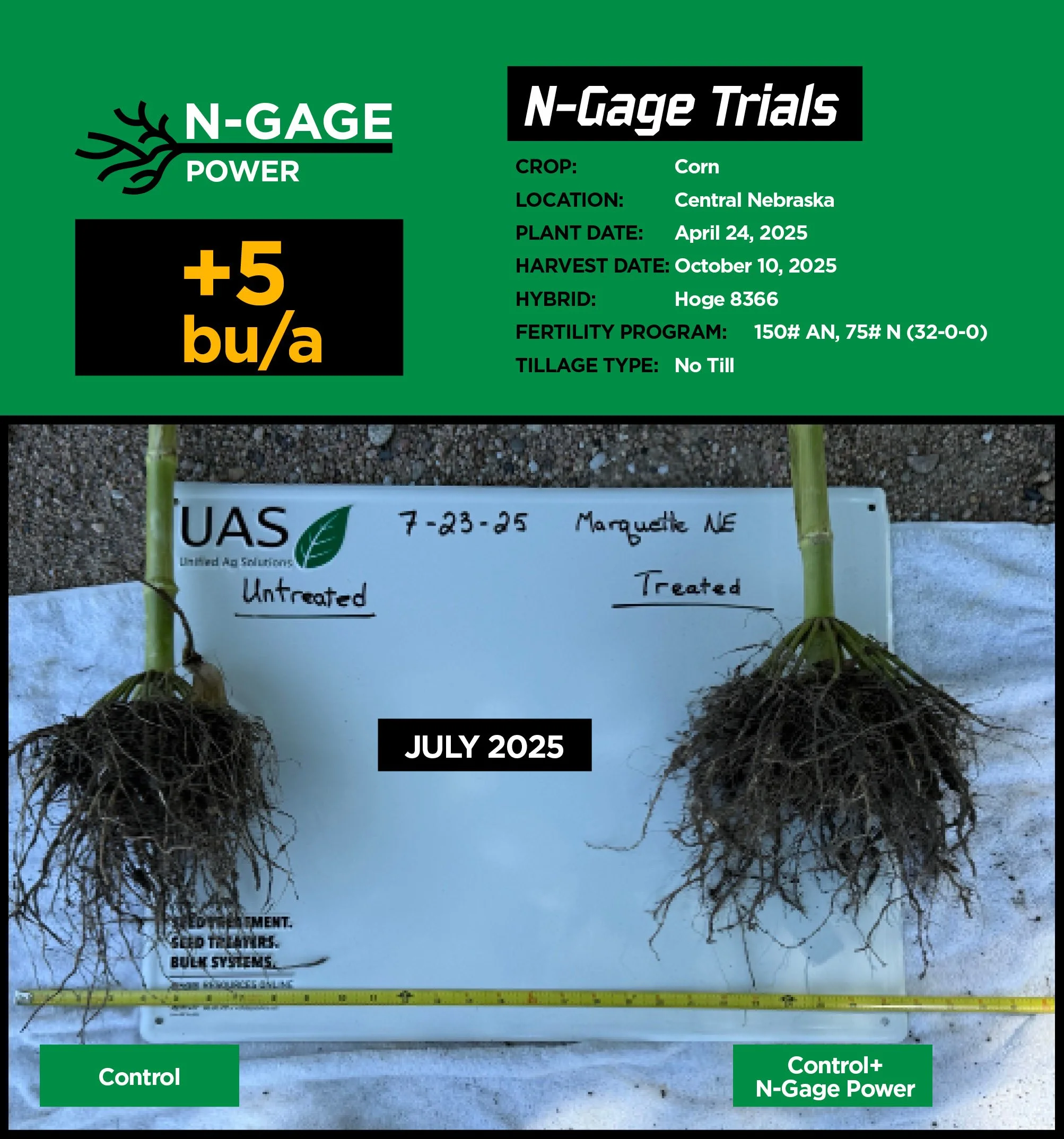
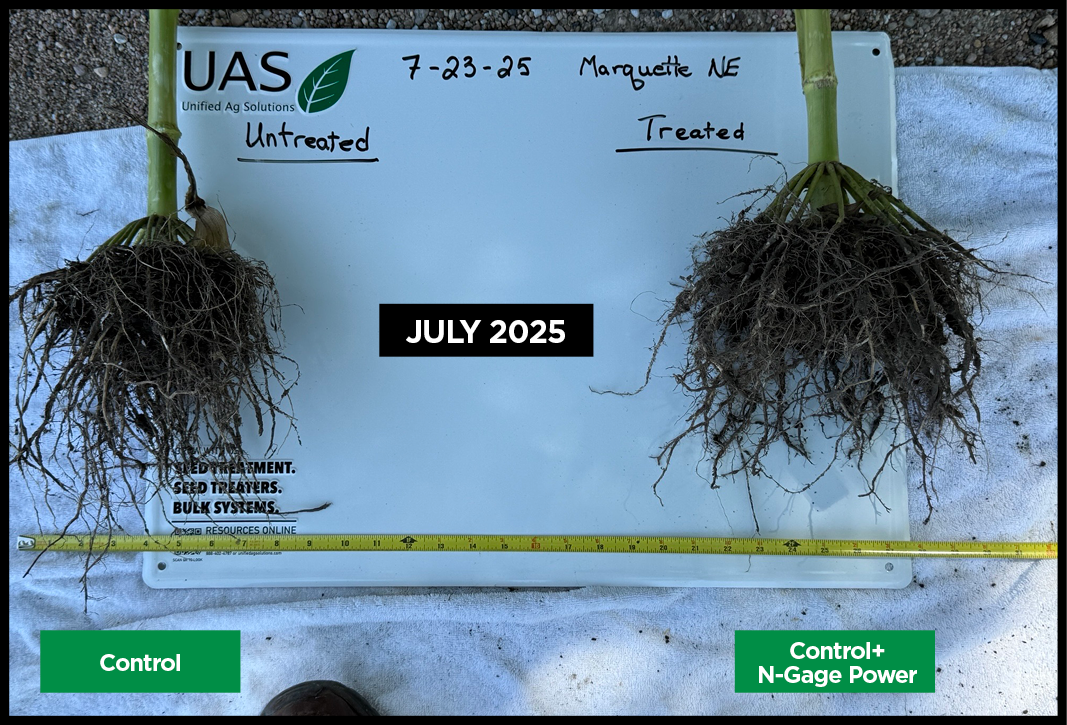
Unified Ag Solutions’ N-Gage Biological lineup reflects this shift toward performance-driven biologicals. Products like N-Gage Power, N-Gage Ultra, and N-Gage Nitro are designed to work as seed treatments, in-furrow, or foliar—giving growers flexibility while still targeting early-season plant health.
Field data across multiple states shows consistent gains in emergence, root mass, and yield response when N-Gage products are added to a standard program, particularly in challenging environments such as cold or saturated soils.
Trend takeaway: In 2026, biologicals aren’t about replacing chemistry—they’re about making every input work harder from the moment the seed is planted.
Bio-Stimulants Focus on Stress Management, Not Just Growth
Another clear trend is the use of biologicals and bio-stimulants to help crops manage abiotic stress, not just push early growth. Products like N-Gage Thrive are gaining traction because they focus on:
Supporting nitrogen uptake
Speeding plant recovery after stress events
Helping crops maintain performance during early setbacks
Rather than reacting after stress has already reduced yield potential, growers are using seed-applied biologicals to build resilience early, when stand establishment and uniformity are decided.
This proactive approach is especially relevant as weather variability continues to impact planting windows and early-season conditions.

Sustainable and Eco-Friendly Seed Treatments Gain Ground
Sustainability isn’t just a talking point—it’s influencing purchasing decisions at the farm gate. In 2026, more growers are asking:
Can this product fit into organic or transitional acres?
Does it support soil biology rather than disrupt it?
Can it reduce reliance on harsher inputs without sacrificing performance?
Unified Ag Solutions’ OMRI-listed organic biologicals and inoculants address this demand directly. Products like:
BioST Nematacide 100 for biological nematode suppression
BioST Organic VPH to support root growth and early plant health
Amplitude ST, a biofungicide/bactericide that helps suppress soil-borne diseases
Phycoterra Organic, delivering plant-available carbon to feed beneficial soil microbes
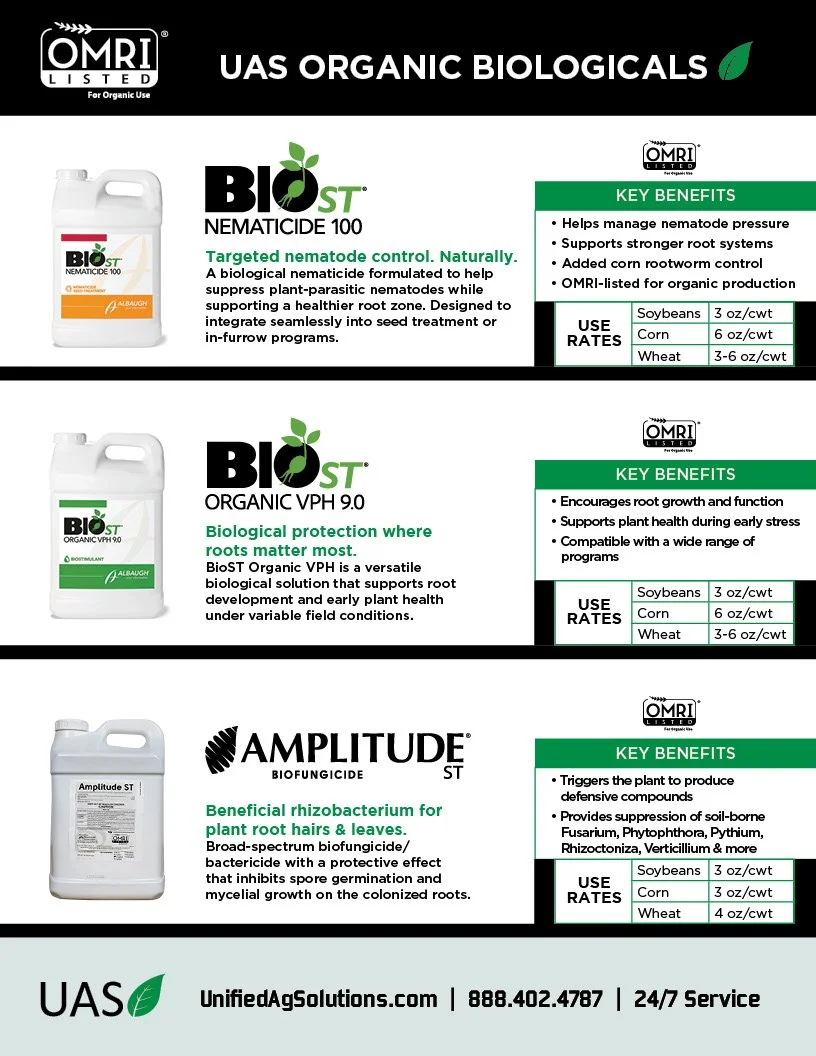
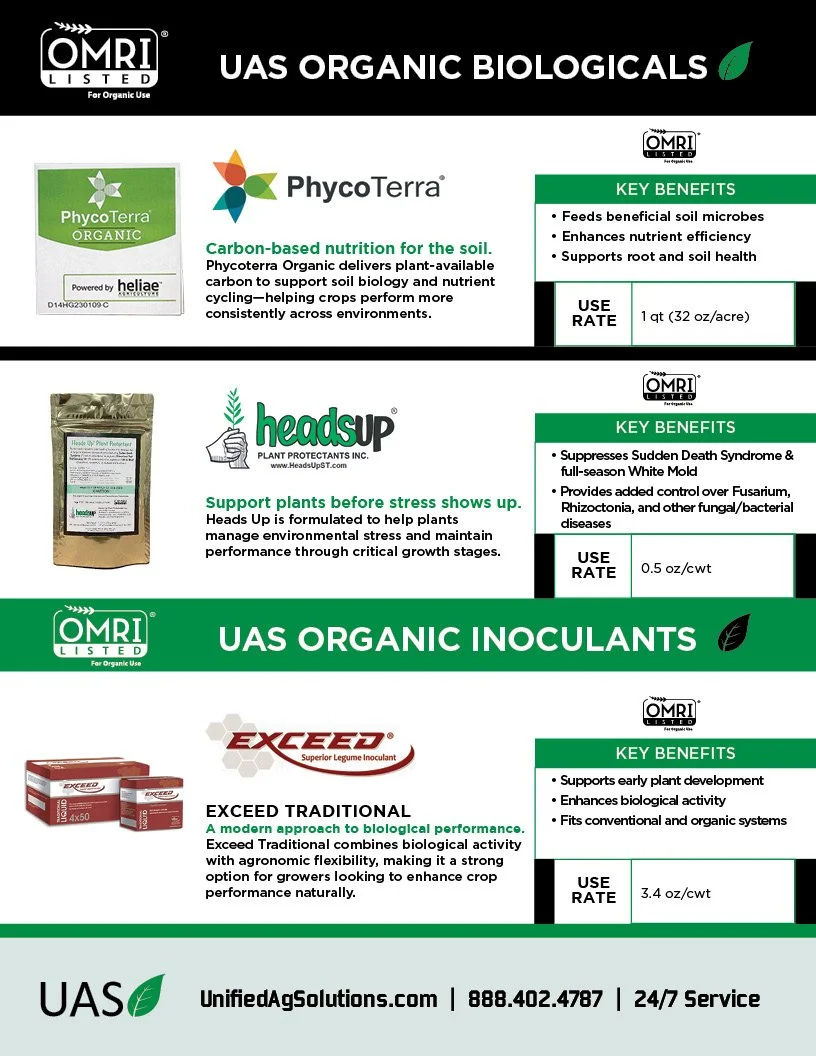
These products are designed to integrate into seed treatment or in-furrow programs while supporting both root health and soil function, making them viable options for organic systems or growers looking to incorporate more sustainable practices.
Trend takeaway: Eco-friendly no longer means “lower performance.” In 2026, biological and organic options are expected to pull their weight agronomically.
Integrated Programs Beat One-Size-Fits-All Solutions
The biggest trend tying everything together is integration. Growers aren’t choosing between conventional, biological, or organic—they’re building customized programs based on:
Crop and rotation
Field history and disease pressure
Soil conditions and planting environment
Operational needs at the seed treater
Seed treatment programs that combine traditional protection with biologicals—like pairing fungicides with N-Gage products or OMRI-listed biologicals—are becoming the norm, not the exception.
Looking Ahead to Spring 2026
As seed treatment decisions are finalized this winter, the direction is clear:
Biologicals are here to stay
Sustainability and performance are no longer mutually exclusive
Early-season plant health sets the tone for the entire crop
For growers and seed treaters, 2026 is about building seed treatment programs that don’t just protect the seed—but actively support the crop from day one.