
Wet conditions during soybean harvest can create problems that extend well beyond the field. One of them is Phomopsis seed decay, a fungal disease that can affect seed quality, germination and early-season establishment.
Fortunately, certain fungicide seed treatments from UAS can help manage the risk.
If your soybeans experienced prolonged rainfall, high humidity or delayed harvest this fall, Phomopsis is a disease worth understanding before the 2027 planting season.
Also known as Diaporthe seed decay, Phomopsis can cause soybeans to become shriveled, discolored and less viable. For seed dealers and growers, that can mean reduced germination rates and concerns about stand establishment the following spring.
Understanding the disease—and choosing the right seed treatment active ingredients—can make an important difference.
What Is Phomopsis Seed Decay in Soybeans?
Phomopsis seed decay is a fungal disease of soybeans caused primarily by Diaporthe longicolla, formerly known as Phomopsis longicolla.
The fungus can infect soybean pods and developing seeds, particularly when warm, wet conditions occur during pod development and seed maturation.
When mature soybeans remain in the field through extended periods of wet weather, the risk of seed infection and deterioration can increase. Phomopsis is especially concerning for soybeans intended for planting because it can directly affect seed germination and vigor.
How Does Phomopsis Affect Soybean Seed Quality?
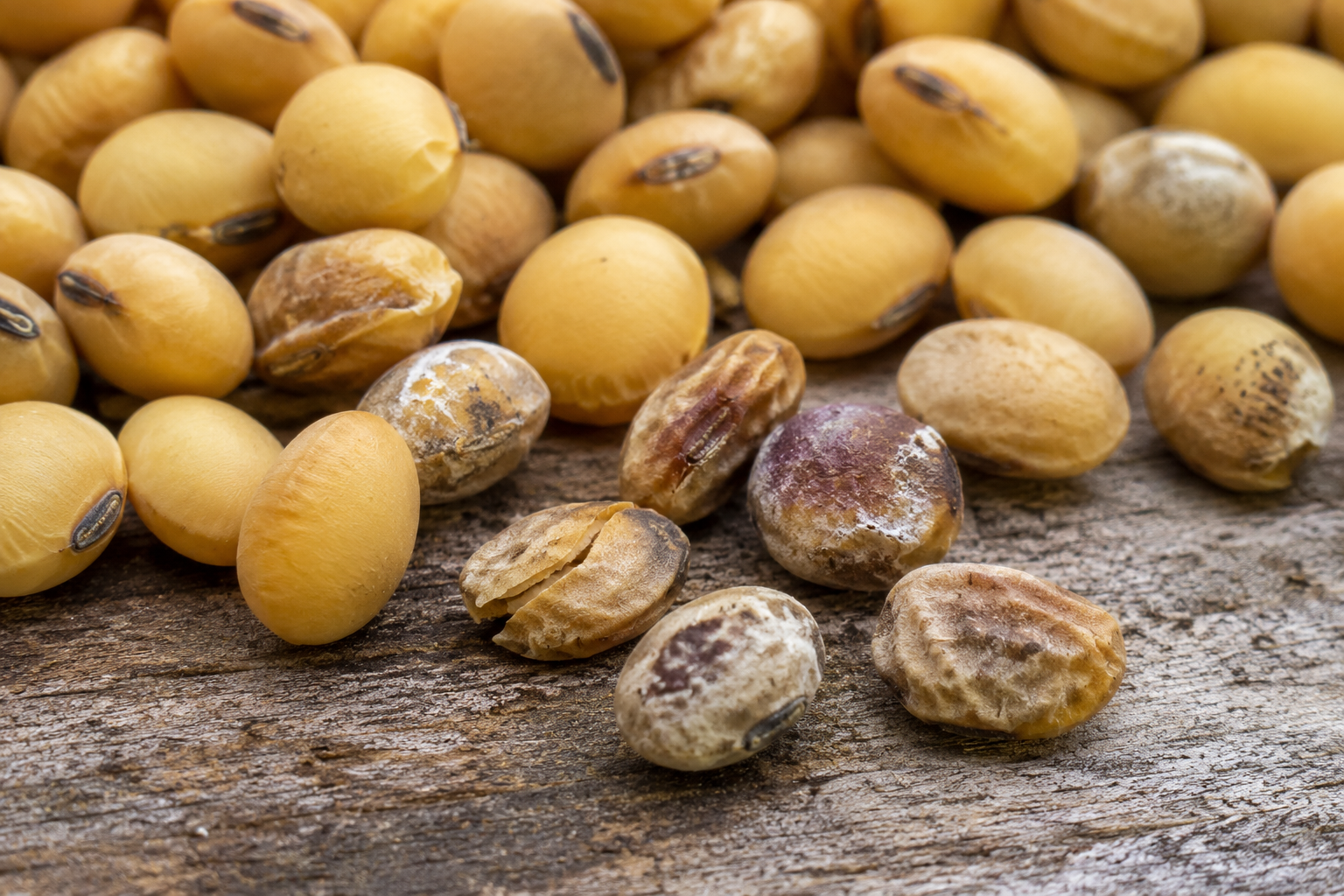
Infected soybeans can develop several recognizable symptoms:
Shriveled or undersized seed: Infected beans may become smaller, wrinkled or misshapen.
Cracked seed coats: Seed surfaces may show visible cracking and deterioration.
White or chalky discoloration: Fungal growth can give infected seed a dull, whitish appearance.
Reduced germination: Infected seed may germinate poorly or fail to germinate.
Weakened seedlings: Seed that does germinate may produce less vigorous seedlings or experience seedling blight.
Not all infected seed shows visible symptoms, which is why germination and seed health testing are important when evaluating questionable seed lots.
The biggest concern isn't necessarily how the seed looks—it's how well that seed will perform when planted.
Why Wet Fall Conditions Matter
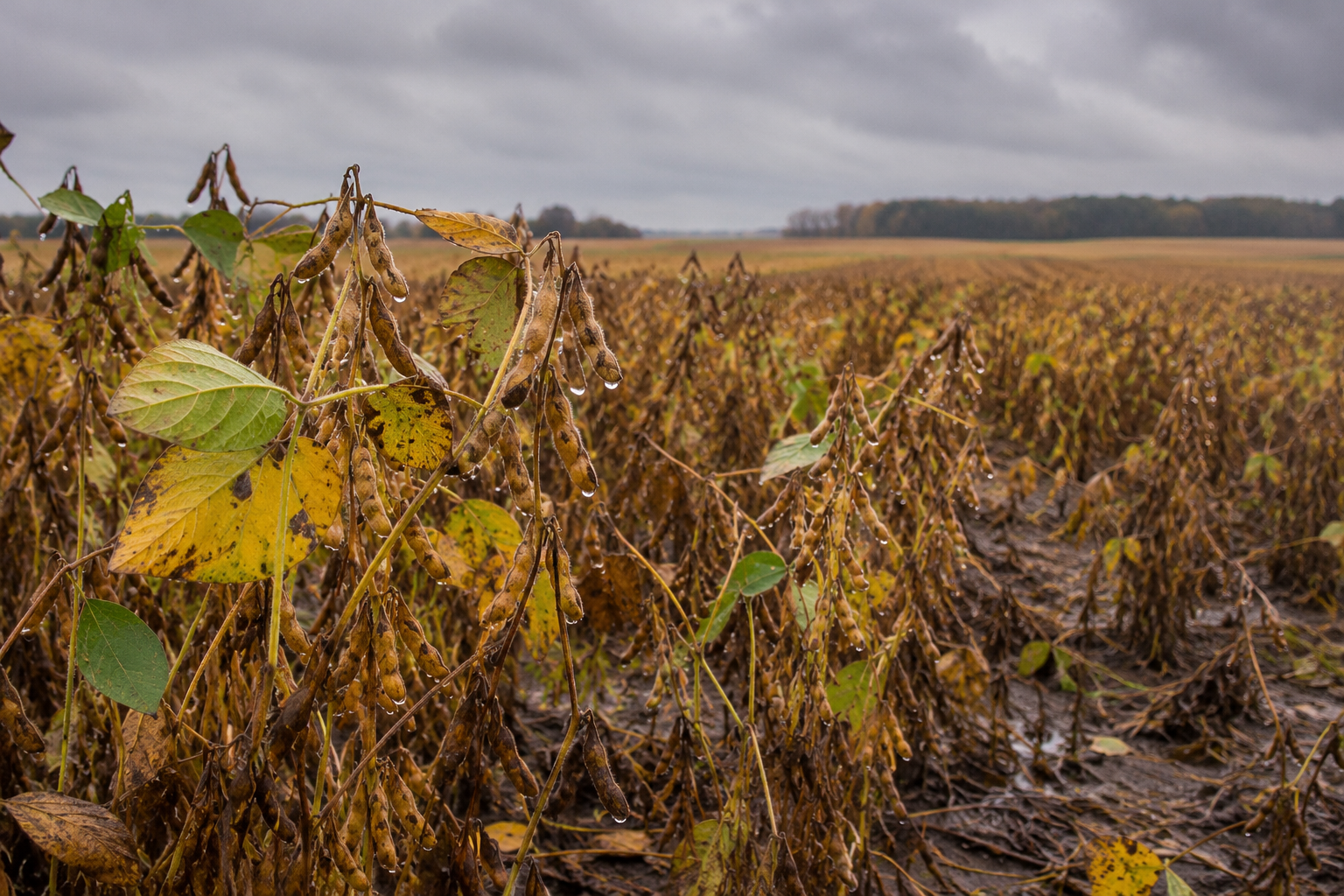
Phomopsis thrives under warm, wet conditions, especially during the later stages of soybean development. Extended rainfall and delayed harvest can allow the fungus more time to infect developing and mature seed.
This makes seed quality an important consideration following a wet fall. A soybean seed lot that experienced prolonged moisture exposure may have a greater risk of fungal infection, even if the seed appeared relatively normal during harvest.
For growers and seed dealers preparing for 2027, it's worth reviewing harvest conditions and evaluating the quality of seed intended for planting.
How Can Thiabendazole Help Manage Phomopsis?
When it comes to managing Phomopsis in soybean seed, the active ingredients in your seed treatment matter.
Thiabendazole (TBZ) is a systemic fungicide used in seed treatment formulations to help protect against certain seedborne fungal diseases, including Phomopsis.
Thiabendazole belongs to the benzimidazole fungicide family. It works by interfering with fungal cell division, disrupting the pathogen's ability to grow and develop. Thiabendazole seed treatment products have been registered for protection against Phomopsis-associated pod and stem blight on soybean seed, with the goal of supporting germination and early seedling health.
When used at labeled rates in an appropriate seed treatment program, thiabendazole can help manage seedborne Phomopsis infection and protect developing seedlings.
However, it's important to understand that fungicide seed treatment cannot restore seed that has already lost viability. Seed lots with severe infection or poor germination should be evaluated before treatment and planting.

Thiabendazole in UAS N-Compass Seed Treatments
At Unified Ag Solutions, we understand that effective seed treatment requires more than simply applying a fungicide. It's about selecting active ingredients that address the disease pressures affecting your seed and fields.
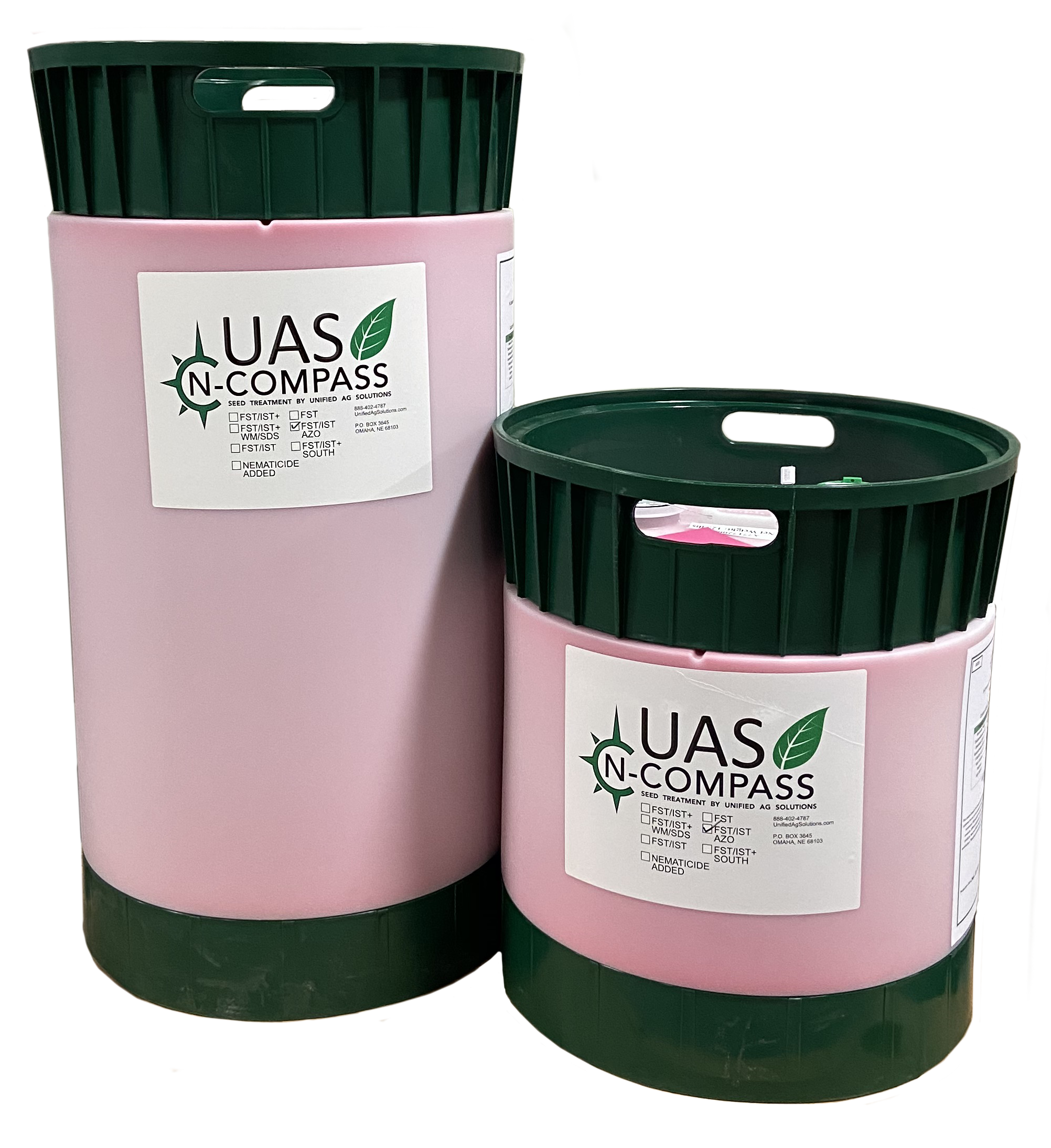
That's why thiabendazole is one of the fungicide active ingredients available in our N-Compass seed treatment programs.
N-Compass treatments are designed to combine complementary fungicide and insecticide active ingredients to address multiple seedborne and soilborne threats.
For soybean seed with potential Phomopsis concerns, a treatment program containing thiabendazole may be worth considering alongside other fungicides selected for the diseases you're trying to manage. The goal is to build a treatment program that addresses the seed's actual needs rather than relying on a single ingredient to handle every disease.
UAS offers customizable N-Compass treatment options, allowing growers and seed dealers to evaluate different fungicide combinations, insecticides, inoculants and biological enhancements.
Talk with your UAS representative about the N-Compass formulations containing thiabendazole and whether they're appropriate for your seed treatment program.
-
Phomopsis, now commonly called Diaporthe seed decay, is a fungal disease that can cause shriveled, cracked or discolored soybean seed and reduce germination.
-
Yes. Warm, wet conditions during pod development, seed maturation and delayed harvest can increase the risk of Phomopsis seed infection.
-
Thiabendazole is a fungicide active ingredient used in labeled soybean seed treatments for protection against Phomopsis-associated disease. Its effectiveness depends on the product, application rate and seed condition.
-
Appropriate fungicide seed treatments may improve germination and emergence when fungal infection is responsible for reduced seed quality. However, treatment cannot restore dead or severely deteriorated seed.
-
Yes. Thiabendazole is among the active ingredients available in UAS N-Compass seed treatment programs. Contact UAS to discuss formulation options and product availability.